
You’re considering smart grow lights. The marketing promises are compelling: bigger yields, lower bills, and perfect plants at the tap of a button. But what does the actual scientific and horticultural research say? It’s time to move beyond the hype and examine the data.
This article breaks down the key findings from horticultural lighting research on programmable systems. We’ll look at spectral efficacy, energy savings, and the real-world impact of automation. You’ll get a clear, expert-backed view of their true effectiveness for both home and commercial growing.
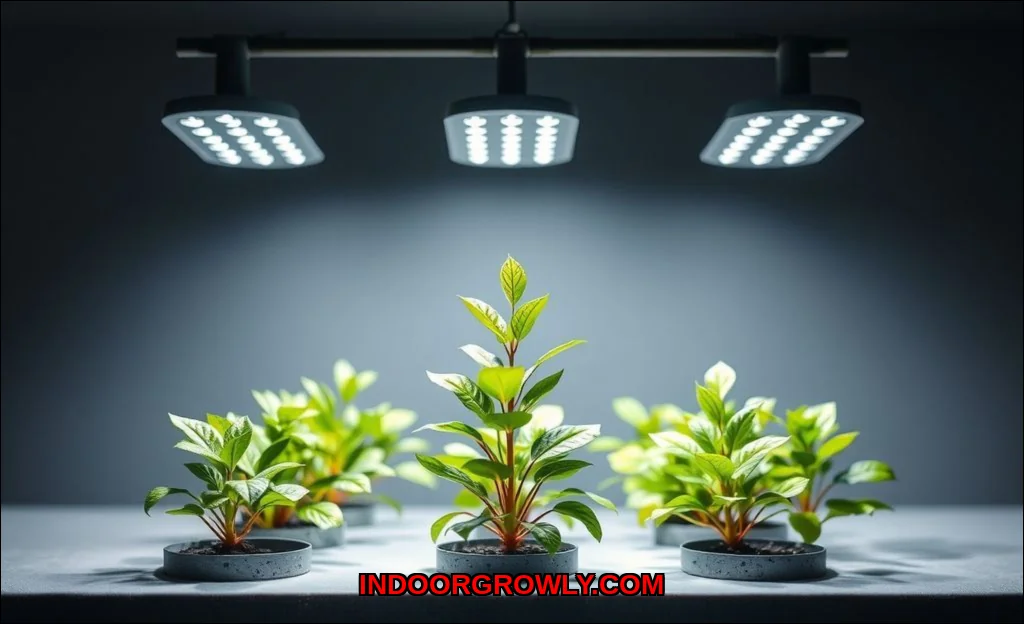
Defining ‘Smart’ in Modern Horticultural Lighting
Forget simple timers. In research terms, “smart” refers to lights with dynamic control over intensity, spectrum, and photoperiod. They can execute complex light recipesprescribed changes in spectral quality and Photosynthetic Photon Flux Density (PPFD) over a plant’s life cycle. This is often managed via apps or integrated sensors, moving far beyond “on” and “off.”
The core entities at play are Photosynthetically Active Radiation (PAR) (the light plants use) and key photoreceptors like phytochrome, which governs processes like flowering and stem elongation. Smart lights aim to manipulate these directly. For a practical entry point, many home growers find success with a system like the Necgemlex Smart LED, which offers programmable spectrum control without a commercial price tag.
Key Research Findings on Spectral Efficacy
LED grow light studies have revolutionized our understanding of plant physiology under LEDs. The consensus? Spectrum tuning works, but with important caveats.
Beyond Blue & Red: The Role of Far-Red and Green
Early LEDs used simple red-blue chips. Modern research shows that adding specific wavelengths, like far-red (700-750nm), significantly influences the Phytochrome Photostationary State (PSS). This can trigger shade-avoidance responses, stretching stems, or conversely, promote compact growthall programmable with a smart system. Green light, once thought useless, is now known to penetrate canopy layers, boosting photosynthesis in lower leaves and improving overall PAR efficiency.
Morphology vs. Yield: A Critical Distinction
Here’s a vital expert insight from the data: spectral tuning excels at optimizing plant morphology and secondary metabolites. You can make a basil bushier or increase anthocyanins in lettuce. However, for sheer biomass (crop yield with smart lights), the total light quantitymeasured as Daily Light Integral (DLI)often remains the dominant factor. The question of do smart grow lights increase yield is nuanced; they enable the conditions for maximum yield more efficiently.
This is where understanding optimal growth curves with dynamic lighting becomes essential. The ability to change the light recipe daily is a game-changer.
Quantifying Energy Efficiency & Cost Savings
This is where the research is most unequivocal. The standout benefit of advanced LEDs is their superior Photon Efficacy (mol/J)how many photosynthetic photons they deliver per joule of electricity.
- Direct Savings: Compared to HPS, modern LEDs can offer 40-60% higher efficacy. This directly lowers HVAC costs, as they emit less radiant heat.
- Automated Dimming: Smart systems with light sensors can maintain a perfect, consistent PPFD across the canopy by dimming automatically, preventing energy waste. University studies on programmable LEDs highlight this for consistent energy savings of automated grow lights.
- Faster ROI: While the upfront cost is higher, the operational savings create a faster return on investment, especially in commercial Controlled Environment Agriculture (CEA).
Automation Benefits: From Photoperiods to Dynamic Recipes
Automation isn’t just convenience. It’s about precision and replicability, core tenets of good science and farming.
Precision Photoperiods and Dawn/Dusk Simulation
Smart lights can execute perfect, repeatable photoperiod control. More advanced systems simulate sunrise and sunset ramps, which research suggests can reduce plant stress. This level of control is impossible with a mechanical timer.
The Power of the Light Recipe
This is the true “smart” advantage. A recipe might start seedlings under a blue-rich spectrum for compactness, shift to a broader, intense spectrum for vegetative growth, and introduce far-red at strategic times to influence flowering. This dynamic approach aligns with plant adaptation limits and signaling pathways. You’re not just giving light; you’re sending specific signals.
These lighting control algorithms are a major focus of current horticultural lighting research, as seen in resources from institutions like Penn State Extension.
Practical Implications for Home & Commercial Growers
How does this research translate to your grow space?
For the Home Gardener & Hobbyist
Your focus should be on DLI and basic spectrum control. Look for a full-spectrum programmable LED that lets you adjust intensity (dimming) and perhaps switch between a “veg” and “flower” mode. The key benefit is energy efficiency and healthier plants, not necessarily massive yield boosts in a small tent. Research on the best light spectrum for vegetative growth confirms that a broad white spectrum with added blue is highly effective. Guides from sources like Gardeners’ World can help translate these concepts for houseplants.
For Commercial & Serious Cultivators
Here, the ROI calculations become critical. You need to analyze:
| Factor | Research-Backed Benefit | Measurement |
|---|---|---|
| Photon Efficacy | Lower kWh/kg production cost | mol/J (micromoles per joule) |
| Canopy Penetration & Uniformity | Higher quality, uniform yield; better Leaf Area Index (LAI) | PPFD maps across canopy |
| Spectral Tuning | Optimized morphology, color, and compound production (e.g., terpenes) | PSS ratio, plant shape, lab assays |
Integrating sensors for closed-loop control (where the light adjusts based on plant feedback) is the next frontier, detailed in industry analyses like those from HortiDaily.
Putting Research Into Practice
The science is clear. Smart grow lights are a powerful tool, not a magic bullet. Their greatest proven value lies in unmatched energy efficiency and the precision to steer plant development. For most growers, prioritizing a light with high PAR efficiency and sufficient, uniform PPFD for your target DLI is the first step. Programmable spectrum is the advanced tool that follows.
Start with your plant’s fundamental DLI needs. Then, consider how spectral control can help you achieve specific quality goals. The research shows that by understanding and applying these principles, you can grow more predictably, efficiently, and successfully than ever before.