
You want your indoor garden to thrive, but you also want it to be efficient and sustainable. Traditional grow lights often work against that goal, wasting energy and providing a static environment. Smart grow lights are the solution, transforming sustainable indoor farming from an ideal into a practical, data-driven reality.
These aren’t just brighter bulbs. They are intelligent systems that merge LED technology with the Internet of Things (IoT). The result is precise control over light spectrum optimization and energy use. For a reliable entry into this technology, many home gardeners start with a system like the Necgemlex Smart LED. It offers the core smart features that make sustainable indoor systems possible.
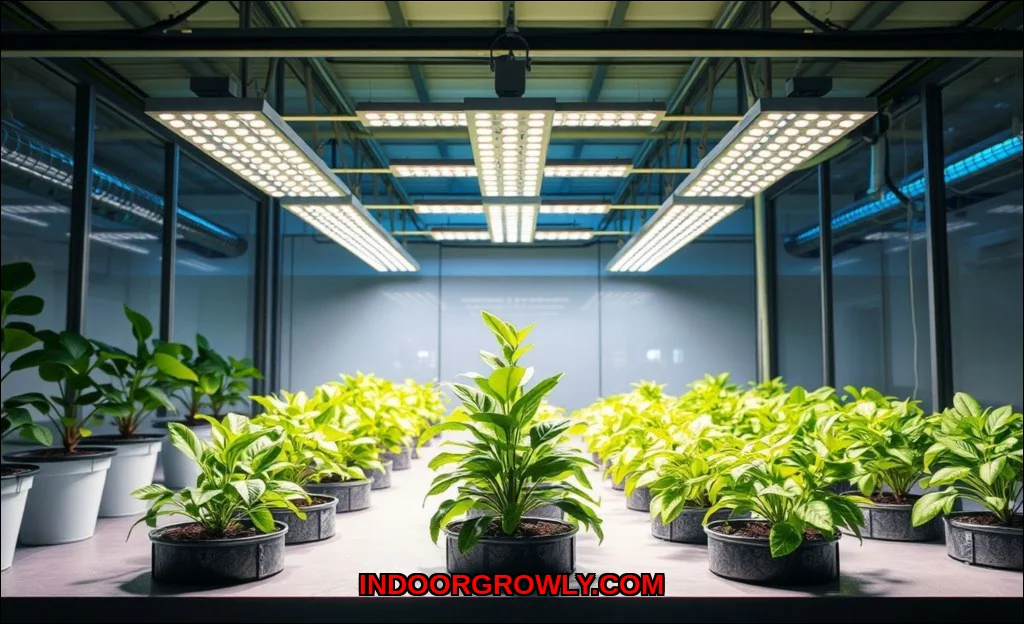
How Smart Lights Drastically Cut Energy and Resource Use
The shift to LED grow lights efficiency is the first major win. LEDs consume significantly less power than HPS or fluorescent fixtures. But the real sustainability leap happens when you add “smart” capabilities. A static light blazes at 100% for 12 hours, whether your seedlings need it or not. A smart light delivers only what’s necessary, precisely when it’s needed.
This intelligence directly answers the question: how do smart grow lights reduce energy consumption? They do it through automation and measurement. You program schedules that match natural circadian rhythms or dim lights during off-peak energy hours. The system’s true power lies in its ability to measure and maintain perfect Daily Light Integral (DLI)the total amount of photosynthetic light a plant receives each day. Instead of guessing, your lights adjust their output to hit the exact DLI target, preventing wasteful over-lighting.
- Direct Energy Savings: Dimmable LED fixtures paired with smart controllers can reduce energy consumption by 30-50% compared to non-dimmable LEDs run on fixed timers.
- Indirect Resource Conservation: Precise lighting reduces excess heat stress. This lowers your need for cooling and, crucially, reduces plant transpiration. You’ll use less water, creating a more holistic, energy-saving horticulture lighting system.
- Longevity: Smart systems often run at lower average intensities, extending the fixture’s lifespan and reducing electronic waste.
The sustainability gain isn’t just from switching to LEDs; it’s from their ‘smart’ capability to deliver the exact light intensity and spectrum a plant needs at each growth stage. This eliminates the massive waste of a ‘one-setting-fits-all’ approach.
Precision Light Spectra: Tailoring Light to Plant Needs
Plants use different light wavelengths for different tasks. Blue light promotes compact, vegetative growth. Red light drives flowering and fruiting. Smart grow lights let you manipulate this Photosynthetically Active Radiation (PAR) with surgical precision.
You create custom light recipespreset spectrums for germination, vegetative growth, flowering, and fruiting. With wireless lighting control, you can switch between these recipes automatically. This level of control is central to modern controlled environment agriculture (CEA). It allows you to influence not just growth speed, but also plant morphology, nutrient density, and flavor profiles.
This precision directly impacts yield and quality. By providing the ideal spectrum, you maximize Photosynthetic Photon Efficacy (PPE)a measure of how efficiently electrical power is converted into plant-usable light. Higher PPE means less energy is wasted as heat. The question, can smart LEDs improve crop yield and quality? is answered by this targeted approach. You’re not just flooding the space with light; you’re nourishing the plant with specific spectral “nutrients.” For a deeper dive into how light influences plant development, explore our guide on how smart grow lights improve indoor plant health.
Achieving Perfect PPFD Uniformity
An even canopy is a happy, efficient canopy. Smart systems help you achieve perfect PPFD (Photosynthetic Photon Flux Density) uniformitythe consistent spread of light intensity across your grow area. Some advanced fixtures have individually controllable zones, allowing you to brighten dim corners or dim hot spots directly from an app. This ensures every plant, not just the ones directly under the bulb, receives its optimal light dose.
Automation and Remote Management for Operational Efficiency
Forget manual timers. The benefits of automated light schedules for indoor plants are profound. You set it once, and the system executes perfectly every day. This consistency reduces plant stress and frees you for other tasks. Remote management via smartphone apps is a game-changer. You can check if lights are on, adjust schedules, or respond to environmental changes from anywhere.
This automation extends beyond simple on/off cycles. Integrate your connected grow lights with other smart sensors for temperature, humidity, and CO2. Create “if-this-then-that” rules. For example: “IF room temperature exceeds 80F, THEN dim lights by 20% to reduce heat load.” This proactive management prevents problems before they affect your plants, saving resources and protecting your investment. This operational streamlining is a key component of the plant behavior analysis that smart systems enable.
Data, Analytics, and the Path to Scalable Farming
This is where smart technology truly unlocks scalability. Every adjustment, every sensor reading, and every growth cycle generates data. You can track energy consumption per plant, correlate light recipes with harvest weights, and identify the most efficient protocols.
True smart systems create a closed-loop of data. Sensors monitor plant response and environmental conditions, then the lights auto-adjust. This moves indoor growing from a static, input-heavy model to a dynamic, responsive, and ultimately more resource-efficient system. For commercial indoor vertical farming, this data is invaluable. It allows for precise forecasting, reduces labor costs, and provides verifiable metrics on sustainabilitya powerful tool for consumers and investors alike. The cost savings from using connected grow light systems come not just from lower power bills, but from this overall increase in operational intelligence and yield predictability.
The Broader Impact: From Home Gardens to Commercial Facilities
The principles of smart lighting apply at any scale. A home gardener using a Wi-Fi-enabled panel can achieve professional-level control, growing herbs with minimal energy. A large-scale vertical farm uses the same IoT principles to manage thousands of fixtures, optimizing for Photosynthetic Photon Efficacy (PPE) and Daily Light Integral (DLI) across vast racks of produce.
This technology is democratizing high-efficiency indoor agriculture technology. It enables local food production in urban centers, reducing transportation emissions and providing fresh produce year-round. The collective impact of widespread adoptionreduced strain on the grid, lower carbon footprints for food, and efficient water usemakes smart lighting a cornerstone of future-proof food systems. For further reading on selecting the right technology for your setup, reputable resources like the University of Minnesota Extension’s guide to lighting indoor plants and the Royal Horticultural Society’s grow light advice offer excellent foundational knowledge.
Smart grow lights are more than a convenience; they are an essential tool for building a sustainable indoor ecosystem. They turn light from a blunt instrument into a precise, data-informed resource. You save energy and water directly. You gain unprecedented control over plant development. And you build a system that learns and adapts, becoming more efficient with every cycle. Start by understanding your plants’ light needs, then choose a system that gives you the control to meet themnothing more, nothing less. That’s the smart path to a greener harvest.