
You’re managing an indoor garden, and you know light is everything. But it’s not just about turning your grow lights on and off. The real secret to explosive growth is delivering the right total amount of light energy each day. That’s where the concept of Daily Light Integral (DLI) comes in, and modern smart grow lights are making it easier than ever to measure and manage.
Gone are the days of guesswork. With integrated sensors and smart controls, these lights do the heavy lifting for you. They track the key metrics in real-time, allowing you to precisely calculate and automate your DLI. This guide will show you exactly how to harness that technology. For a system that simplifies this process with built-in sensors and app control, many growers find success with the Necgemlex Smart LED. It’s a practical tool that puts expert-level data at your fingertips.
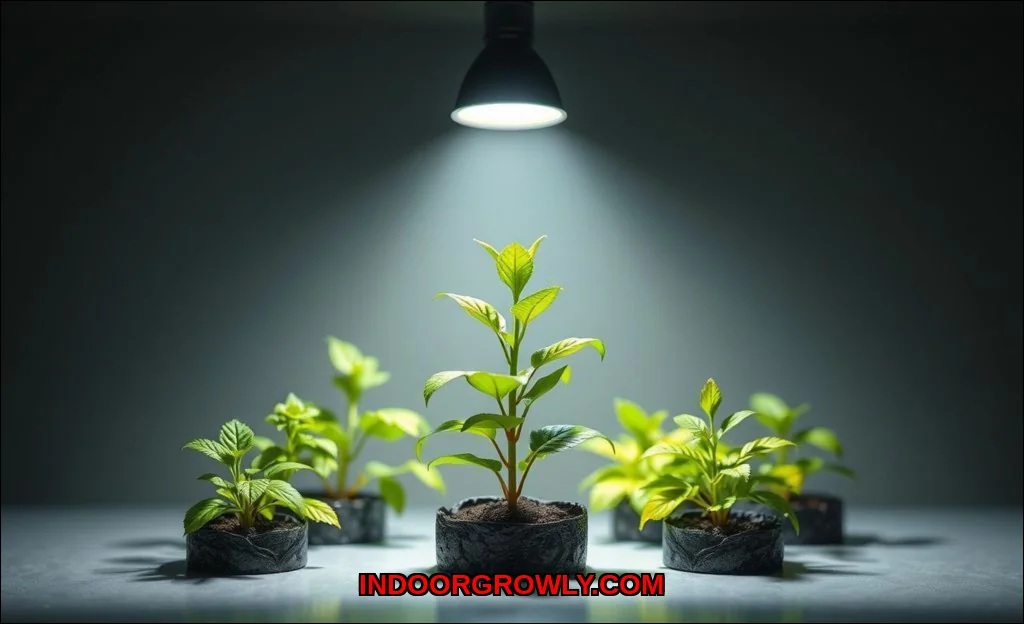
What is Daily Light Integral (DLI) and Why It Matters
Think of Daily Light Integral (DLI) as your plant’s daily calorie budget for light. It measures the total number of photosynthetic photons delivered to a square meter over a 24-hour period. The unit is moles per square meter per day (mol/m/d). If your plant doesn’t get its full “meal” of light, growth stalls. Too much, and you risk light stress, bleaching, or wasted energy.
DLI is the product of two critical factors: light intensity and duration. Light intensity is measured as Photosynthetic Photon Flux Density (PPFD), in micromoles per square meter per second (mol/m/s). Duration is the Photoperiod, or how many hours your lights are on. Every plant species has an ideal DLI range that varies by its growth stageseedlings need less than flowering tomatoes. Hitting that target is the cornerstone of improving indoor plant health with precise lighting.
How Smart Grow Lights Measure and Report Light Data
This is where technology changes the game. Traditional methods required a handheld quantum sensor or PAR meteran accurate but expensive tool you’d use for spot checks. Smart grow lights with integrated quantum sensors provide real-time PPFD data, eliminating the need for a separate meter and allowing for continuous DLI tracking.
Heres what a capable smart light system typically offers:
- Built-in PAR Sensors: These measure the Photosynthetically Active Radiation (PAR) spectrum (400-700 nm) right at the canopy level.
- Real-Time PPFD Mapping: The accompanying app often displays a live PPFD map of your grow area, showing you exactly where light intensity is strong or weak.
- Automatic DLI Calculation: The app continuously multiplies the average PPFD by the photoperiod, giving you a running total of the day’s DLI.
- Ambient Light Compensation: The true power of smart lights lies in their ability to automatically adjust their output in response to ambient light from a window, maintaining a consistent target DLI all day.
Key Metrics Your Smart Light App Shows You
To effectively use this data, you need to understand the dashboard. You’ll see terms like PPFD, Photoperiod, and cumulative DLI. This real-time feedback loop is essential for evaluating and adjusting your lighting strategies on the fly, moving from a set-it-and-forget-it approach to a dynamic one.
The Core DLI Calculation Formula
Even with automation, understanding the math empowers you. The fundamental formula for calculating DLI is straightforward:
DLI (mol/m/d) = PPFD (mol/m/s) Photoperiod (hours) 0.0036
Let’s break down that constant, 0.0036. It converts seconds to hours and micromoles to moles. There are 3,600 seconds in an hour (60 x 60), and 1,000,000 micromoles in a mole. So, 3600 / 1,000,000 = 0.0036.
Example Calculation: Your smart light reports an average PPFD of 500 mol/m/s over a 16-hour photoperiod.
DLI = 500 16 0.0036
DLI = 28.8 mol/m/d
This number is your starting point. You can then compare it to known plant requirements. For a deeper dive into the science of photosynthetic photon flux and its applications, resources from institutions like Penn State Extension offer excellent foundational knowledge.
Step-by-Step: Calculating and Adjusting DLI in Practice
Now, let’s apply this with your smart lights. This process turns raw data into a growth plan.
- Establish Your Baseline. Use your light’s app to view the current PPFD reading at the plant canopy. Run the lights for a full photoperiod and note the final DLI the app calculates.
- Identify Your Target. Research the ideal DLI for your specific plant and its stage. Leafy greens might target 12-17 mol/m/d, while flowering cannabis can require 40+ mol/m/d.
- Adjust to Hit the Target. You have two levers: PPFD (light intensity) and Photoperiod (duration).
- To increase DLI: Raise the light intensity in the app or lengthen the photoperiod.
- To decrease DLI: Dim the lights or shorten the on-time.
- Automate the Maintenance. Set your target DLI in the app if the feature is available. The light will then auto-adjust its output throughout the day to hit that exact number, compensating for any ambient light changes.
This is particularly powerful for scenarios like automating DLI for cannabis seedlings or creating the perfect DLI calculator for indoor vegetables setup. For those seeking product recommendations to achieve this, roundups like the Bob Vila guide to the best grow lights of 2025 can provide a helpful starting point for your research.
Advanced Tips: Matching DLI to Plant Species and Growth Stage
Precision is what separates good results from great ones. General guidelines are a start, but you can refine further.
Know Your Plant’s Light Appetite
Plants are categorized by their DLI requirements. Heres a quick reference table:
| Plant Type | Typical DLI Range (mol/m/d) | Growth Stage Notes |
|---|---|---|
| Low-Light Foliage (e.g., Pothos) | 3 – 6 | Maintenance range; can tolerate lower light. |
| Leafy Greens (Lettuce, Herbs) | 12 – 17 | Ideal for rapid, compact vegetative growth. |
| Fruiting Vegetables (Tomatoes, Peppers) | 20 – 30+ | Requires high DLI for flowering and fruit set. |
| Photoperiod Cannabis (Vegetative) | 20 – 40 | Increase gradually from seedling to mature veg. |
| Photoperiod Cannabis (Flowering) | 40 – 50+ | Maximum intensity for bud development. |
Stage-Based Adjustments
- Seedlings/Cuttings: Start with a low DLI (5-10 mol/m/d) to prevent stress. Use your smart light’s dimming function to ramp up intensity over 7-10 days.
- Vegetative Growth: Increase DLI to the plant’s optimal vegetative range. This builds strong stems and lush foliage.
- Flowering/Fruiting: This is the peak demand phase. Maximize DLI within the plant’s tolerance to drive yield and quality. Monitor for signs of light stress.
The goal is to provide a consistent, optimal light “dose.” Modern smart LED technology is fundamentally changing indoor farming by making this level of control accessible. It moves you from simply providing light to truly engineering the photoperiod and intensity for specific outcomes.
Putting It All Together
Calculating and managing DLI with smart grow lights isn’t complexit’s a streamlined process of measurement, calculation, and adjustment. You leverage the technology to get accurate PPFD data, apply the simple formula to understand your current output, and then use the light’s controls to dial in the perfect daily dose for your plants.
Start by checking what your current setup delivers. Identify the gap between that number and your plant’s ideal DLI. Then, make a plan to close it using intensity and timing. Embrace the automation features to maintain consistency. This data-driven approach removes uncertainty and gives you direct control over one of the most powerful levers for plant growth. Your garden will show you the difference.