
You’ve invested in smart indoor grow lights for their efficiency and control. But now you’re facing an unexpected challenge: heat. That warmth radiating from your fixture can quickly turn a productive grow space into a stressful environment for your plants. Managing this thermal output isn’t just about comfortit’s fundamental to plant health, yield, and the effective use of your technology.
The good news is that heat from modern LEDs is highly manageable. With a few strategic adjustments to your setup and settings, you can maintain the perfect climate. It starts with knowing where the heat comes from and implementing a layered approach to control it. For smaller tents or starter setups, choosing a light designed with cooling in mind makes a significant difference. Many growers find success with fixtures like the VIVOSUN AeroLight A100SE, which integrates efficient heat sinks and a form factor that promotes air circulation right out of the box.
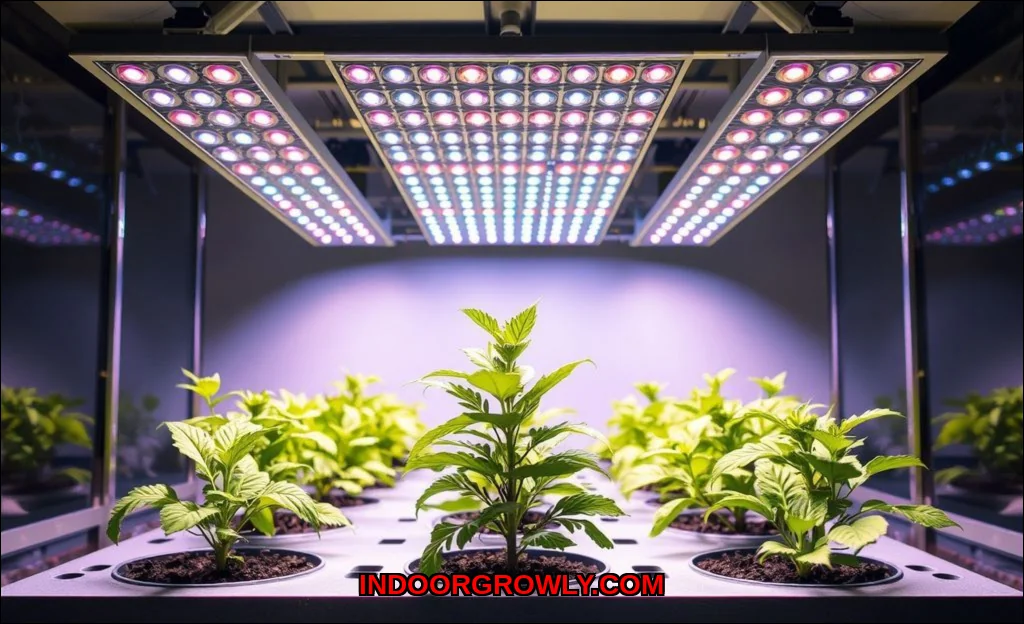
Why Your Smart Grow Lights Generate Heat
It’s a common misconception that LED grow lights run cool. While they are far more efficient than older HID technology, they still produce significant heat. This heat originates from two main sources: the LED Diode itself and, more importantly, the power supply or Driver Heat.
Each diode converts electricity into light, but the process isn’t 100% efficient. A portion of the energy is lost as heat. This is directly tied to the light’s intensity and PAR output heat. The higher the intensity, the more heat is generated at the diode junction. The second, and often larger, source is the driver. Brands like Mean Well are industry standards for reliability, but even the best drivers generate warmth as they convert AC power to the DC power your LEDs need. In many fixtures, this driver is attached directly to the board or housed inside the unit, dumping all its heat into your grow space.
This excess heat elevates your grow tent temperature and, critically, your canopy temperature. When leaf surfaces get too hot, plants experience heat stress, shutting down vital processes like photosynthesis and transpiration. It’s also vital to distinguish between Light Burn vs. Heat Stress; one is caused by pure light intensity (PPFD), while the other is a result of ambient temperature, though they often occur together.
Optimizing Smart Light Settings to Minimize Heat
Your first line of defense is using the smart features you paid for. Modern lights allow you to fine-tune the environment without sacrificing growth.
Dimming and Intensity Control
This is your most powerful tool. Does dimming LED lights reduce heat output? Absolutely. Lowering the power to the diodes directly reduces their thermal output. Use this during seedling and early vegetative stages when plants need less light. You can also dim lights during the hottest part of the day if your environment struggles, creating photoperiod heat cycles that work with your climate control.
Spectrum and Photothermal Ratio
Different wavelengths carry different energy levels. The Photothermal Ratio refers to the balance between light energy for photosynthesis and the associated heat delivered. Far-red and infrared spectra can contribute more to leaf temperature than blue light. Many smart lights let you adjust spectrums; using a “cooler” blue-heavy spectrum during hot periods can help manage light spectrum heat at the canopy level.
Smart controls are a game-changer for how smart grow lights influence leaf development in indoor plants. By dialing in the right intensity and spectrum, you directly influence transpiration rates and leaf thickness, which in turn affects how plants handle heat.
Implementing Active and Passive Cooling Solutions
Once your light settings are optimized, tackle the heat directly with thermal management solutions. Think in terms of active vs passive cooling.
Passive Cooling: The First Step
Passive methods require no moving parts and are incredibly effective. The most impactful step you can take? Relocating the driver outside the grow space is the single most effective passive cooling step. If your fixture allows it, mount the external driver in a cool, ventilated area outside your tent. Next, ensure your fixture has a robust, finned Heat Sink. This aluminum component pulls heat away from the diodes through thermal dissipation. Keep it clean and dust-free.
Active Cooling: Moving Air Strategically
Active cooling uses fans to move air. Inside the tent, use Oscillating Fans to create a gentle breeze across the canopy. This disrupts the boundary layer of hot, humid air around each leaf, dramatically improving transpiration (the plant’s own cooling system). For the fixture itself, some high-power Quantum Board designs or bar lights include integrated cooling fans.
Your exhaust system is critical. An Inline Fan from a brand like AC Infinity, paired with a Programmable Controller, can automatically ramp up speed when temperature or humidity thresholds are hit. Pair this with a dedicated Active Intake fan or passive intake vents to ensure a steady flow of fresh, cooler air. This constant exchange removes hot air from the light source before it can build up.
Designing Your Grow Space for Better Heat Management
Your overall setup dictates how easily you can manage climate. A well-designed space makes every cooling strategy more effective.
- Light Height: Always maintain the manufacturer’s recommended hanging height. Raising the light slightly increases the footprint and lowers intensity and heat at the canopy. This is a simple fix for how to cool down LED grow lights in a small tent.
- Airflow Path: Design your airflow to pass over the light fixture. Position your exhaust port at the top of the tent (heat rises) and ensure intake air is drawn past the light. This creates a “chimney effect” specifically for light fixture cooling.
- Reflective Walls: Use high-quality reflective lining (like Mylar) to ensure lightand its associated radiant heatis distributed evenly, not absorbed by dark tent walls which then re-radiate heat.
- Ambient Room Temperature: Control the temperature of the room outside your tent. An air-conditioned or cool basement room is far easier to manage than a hot attic. Your exhaust system can only bring in air that’s cooler than what’s inside.
For a deep dive on setting up an optimal environment from the start, our guide on how smart grow lights improve indoor plant health covers foundational principles.
Monitoring and Maintaining Optimal Temperature Ranges
You can’t manage what you don’t measure. Proactive monitoring prevents small issues from becoming major problems.
Key Metrics to Track
Don’t just look at air temperature. You need a holistic view:
| Metric | Ideal Range | Why It Matters |
|---|---|---|
| Canopy Temperature | 72-80F (22-27C) | Direct leaf surface temp; most accurate indicator of plant experience. |
| Grow Tent Air Temp | 68-82F (20-28C) | General ambient temperature. Varies by growth stage. |
| Vapor Pressure Deficit (VPD) | 0.8 – 1.2 kPa (veg) 1.0 – 1.5 kPa (flower) | Managing heat is not just about lowering temperature, but about controlling the Vapor Pressure Deficit (VPD). Proper VPD ensures plants can transpire effectively, which is their natural cooling mechanism. |
| Root Zone Temperature | 68-75F (20-24C) | Warm roots in hot media reduce oxygen uptake and stress plants. |
Preventative Maintenance
- Dust Regularly: Dust acts as an insulator on heat sinks and fan blades, drastically reducing their efficiency. Wipe down fixtures monthly.
- Check Driver Health: Feel your driver periodically. Excessive heat can be a sign of impending failure or Thermal Runaway. Ensure it has ample ventilation.
- Inspect Electrical Connections: Loose connections create resistance, which generates unnecessary heat. Turn off power and check tightness seasonally.
- Calibrate Sensors: Your smart controller’s temperature/humidity probe can drift. Calibrate it yearly against a known-accurate device.
For advanced environments, introducing supplemental CO2 (via tanks or even a simple CO2 Bag) can allow you to run slightly higher temperatures (up to 85F/29C) because the plants’ metabolic efficiency is increased. This is a nuanced technique, but it highlights the relationship between PPFD vs. Heat and atmospheric gas.
When selecting equipment, consulting expert roundups like the Bob Vila guide to the best grow lights or the cannabis-focused LED analysis at Grow Weed Easy can provide valuable insights into thermal performance and driver design before you buy.
Putting It All Together
Reducing heat from smart grow lights is a systematic process. Start with your light settingsdim and adjust the spectrum. Then, implement cooling: relocate the driver, use exhaust and circulation fans aggressively. Design your space to facilitate airflow from the bottom, over the light, and out the top. Finally, monitor everything, especially VPD and canopy temperature, not just the room thermometer.
Remember, the goal isn’t to eliminate heat entirely. It’s to manage it within an optimal range where your plants can thrive. Your smart lights give you precise control over the “light” part of the equation. By applying these thermal management strategies, you gain precise control over the “heat” part, unlocking the full, healthy potential of your indoor garden.