
In indoor horticulture, the distance between a grow light and the plant canopy is not a mere convenience. It is a primary determinant of photosynthetic efficiency, plant morphology, and overall crop health. Precise light placement directly governs the intensity of Photosynthetically Active Radiation (PAR) delivered to leaves, influencing everything from stem elongation to flower set.
Modern cultivation leverages technology for precision. Advanced systems, like the Necgemlex Smart LED, integrate sensors and automation to manage this critical variable dynamically. This evolution moves beyond static “one-size-fits-all” hanging heights to a data-driven approach, optimizing light delivery for each growth stage and plant species.
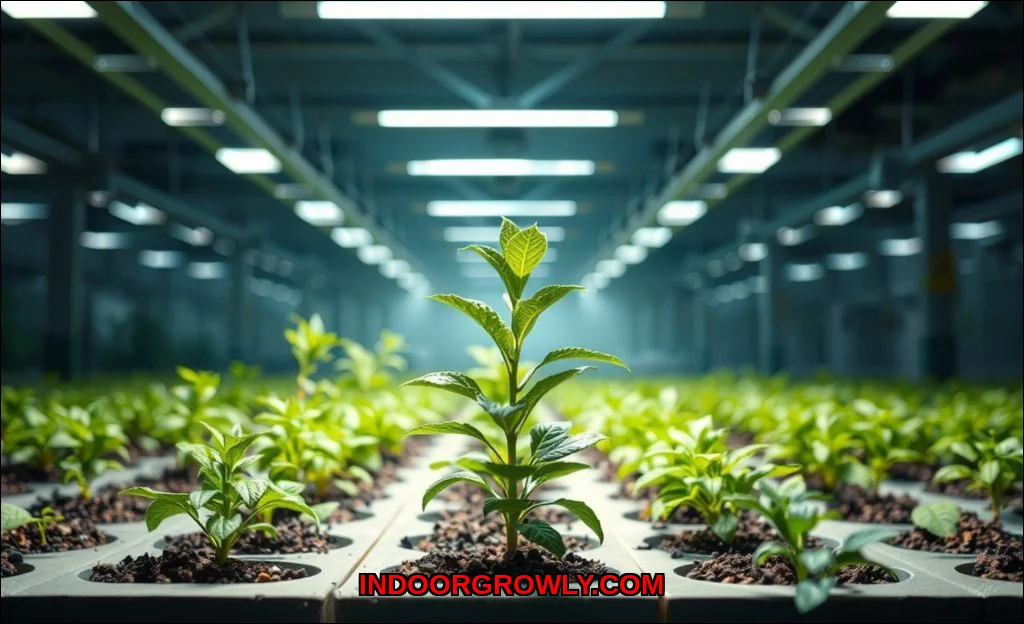
The Photobiology of Light Distance: PPFD and DLI
The core scientific principle governing light intensity for plants is the Inverse Square Law. In simple terms, light intensity diminishes exponentially as distance from the source increases. Doubling the distance from the fixture reduces light intensity to one-quarter. This physics law makes millimeter-level adjustments critical for maintaining target intensity at the canopy.
This intensity is measured as Photosynthetic Photon Flux Density (PPFD), expressed in micromoles per square meter per second (mol/m/s). PPFD quantifies the number of photosynthetically useful photons hitting a specific area each second. The cumulative daily dose of this light is the Daily Light Integral (DLI), measured in mol/m/day. A plant’s DLI requirement is species-specific and must be met by the correct combination of PPFD and photoperiod.
For instance, seedlings require a low PPFD to avoid stress, while flowering cannabis or fruiting tomatoes demand a high DLI. An improperly placed lighttoo far or too closefails to deliver the correct PPFD, leading to a DLI deficit or surplus. This is why a generic light distance chart has limited utility without considering the fixture’s output and the plant’s specific needs.
Consequences of Improper Distance: Stress, Stretch, and Burn
Incorrect LED grow light height manifests in distinct physiological symptoms. These are not minor issues but signals of significant metabolic disruption.
Excessive Distance (Low PPFD)
- Etiolation (Stretching): Plants stretch stem internodes excessively, seeking more light. This results in weak, spindly growth prone to lodging.
- Reduced Leaf Size and Chlorophyll Production: Leaves become pale and smaller as the plant conserves resources.
- Poor Yield and Delayed Flowering: Inadequate energy capture directly limits biomass accumulation and reproductive development.
Insufficient Distance (High PPFD / Light Stress)
- Photobleaching and Light Burn: Chlorophyll degrades, causing white or yellow patches on upper leavesclassic signs of light burn on cannabis leaves. This is irreversible damage to the photosynthetic apparatus.
- Photoinhibition: The light-harvesting complexes are overwhelmed, reducing photosynthetic efficiency despite abundant light.
- Heat Stress and Moisture Loss: Proximity increases radiant leaf temperature, accelerating transpiration and potentially causing leaf curl or necrosis.
Research indicates that chronic light stress can shift plant metabolism toward photoprotection and repair, diverting energy from growth. This underscores why optimal hanging distance is a cornerstone of efficient indoor plant health management.
Photomorphogenesis: How Distance Influences Plant Form
Light does more than drive photosynthesis. It is a key environmental signal regulating Photomorphogenesisthe process by which light controls plant shape, size, and development. This signaling is mediated by photoreceptor proteins like phytochrome, cryptochrome, and phototropin.
Light distance, by altering the ratio of red to far-red light and overall intensity, directly triggers these photoreceptors. A close light source with high intensity typically promotes compact, bushy growthideal for basil or lettuce. A more distant light can encourage stem elongation, which might be desirable in the early vegetative stage for some crops. Understanding this allows growers to manipulate plant architecture without chemical growth regulators, a key principle in achieving growth transparency and control with modern lighting.
Optimizing Distance for Growth Stages and Crop Types
Optimal hanging distance is a dynamic variable. It must be recalibrated as the canopy grows and plant requirements change. The following table provides generalized starting points, emphasizing the need for adjustment based on actual PPFD measurements.
| Growth Stage / Crop Type | General Distance Range | PPFD Target Range (mol/m/s) | Key Considerations |
|---|---|---|---|
| Seedlings / Clones | 24 – 36 inches | 100 – 300 | Prevent drying and stretching. The question of how far should LED grow lights be from seedlings is critical for establishing robust, compact plants. |
| Vegetative Stage (Leafy Greens, Herbs) | 18 – 24 inches | 300 – 600 | Promote leaf expansion and compact internodal spacing. |
| Flowering / Fruiting (e.g., Cannabis, Tomatoes) | 12 – 18 inches | 600 – 1000+ | Maximize flower and fruit development. Managing smart grow light distance for the flowering stage requires balancing high PPFD with heat and light stress mitigation. |
| High-Light Fruiting Plants (Peppers) | 12 – 16 inches | 800 – 1200 | These crops tolerate and require very high DLI. Watch closely for stress symptoms. |
Distance varies dramatically with fixture wattage, diode type, and lens optics. Always consult manufacturer guidelines and verify with a meter.
For specific applications, such as adjusting grow light height for tomatoes, the vegetative stage benefits from a slightly greater distance to encourage strong stem growth, while the fruiting stage demands closer proximity to meet the high energy demands of fruit set and maturation.
The Role of Light Uniformity and Canopy Penetration
Hanging height profoundly affects light uniformity across the canopy. A light placed too high may provide even coverage but with insufficient intensity. A light placed too low creates intense “hot spots” directly underneath and dark shadows on the edges, leading to uneven growth.
canopy penetrationthe ability of light to reach lower leavesis influenced by distance and spectrum. A well-optimized distance, often in conjunction with side-lighting or inter-canopy lighting strategies, ensures lower leaves remain photosynthetic, improving overall plant efficiency and yield. Resources from institutions like Penn State Extension provide excellent foundational knowledge on these spatial lighting concepts.
Smart Light Features for Automated Distance Management
Next-generation smart grow light systems are solving the complexity of manual distance adjustment. They utilize integrated PAR sensors and machine learning algorithms to perform real-time, closed-loop adjustments.
These systems can automatically modulate light output (dimming) to maintain a target PPFD at the canopy as plants grow taller, effectively compensating for changes in fixture distance. Some advanced models may even adjust spectrum to influence plant form. This automation ensures a consistent DLI is delivered, preventing photoinhibition and optimizing resource use efficiency. It represents a significant shift from reactive to proactive light management, a topic explored in depth by industry publications like HortiDaily.
For the indoor gardener or commercial operator, this means less guesswork, reduced risk of plant light burn, and more predictable results. The grower’s role evolves from manually measuring and adjusting height to setting cultivation targets and letting the system’s intelligence maintain the ideal light environment.
Ultimately, mastering light distance is mastering the delivery of energy and information to the plant. It requires an understanding of photobiology, physics, and the specific demands of the crop. While tools like PAR meters and manufacturer guidelines are indispensable, the future lies in automated systems that integrate this knowledge. By ensuring the correct PPFD and DLI through precise distance management, growers directly influence photosynthetic rate, structural integrity, stress resilience, and final yield. The space between the light and the leaf, therefore, is not empty. It is the critical zone where light becomes life.