
You’ve carefully nurtured your indoor garden, but the results are puzzling. Some plants are tall and spindly, leaning desperately toward the light. Others are short and bushy, while a few seem stunted altogether. This uneven plant development is a common frustration, and the culprit is almost always inconsistent light. Traditional grow lights often create a feast-or-famine environmenttoo intense in one spot, too dim in another.
Smart grow lights are designed to solve this exact problem. They move beyond simple on/off timers to deliver a precise, consistent, and uniform light environment. This technology directly addresses the core physiological reasons plants grow unevenly. For a system that excels in delivering this uniform, controllable light, many indoor gardeners have success with the Necgemlex Smart LED. Its programmable spectrum and intensity are key tools for preventing the issues we’re about to dissect.
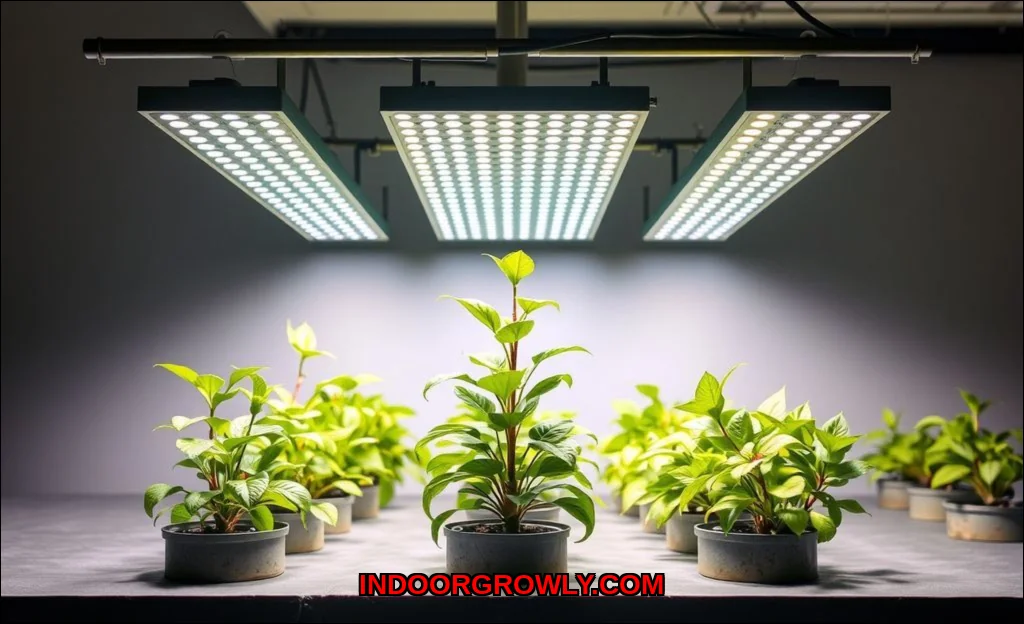
The Core Problem: Why Plants Develop Unevenly Under Artificial Light
Uneven growth isn’t just an aesthetic issue; it’s a sign of plant stress. Your plants are responding to their environment through innate behaviors. Phototropism causes stems to bend toward the strongest light source. If your light is off-center or has hotspots, plants on the edge will stretch unnaturally. This leads to weak, “leggy” growth.
More subtly, plants exhibit Photomorphogenesistheir physical development is shaped by light signals. The wrong spectrum or intensity can trigger shade avoidance syndrome, where a plant, sensing competition from a “canopy” (even if it’s just a shadow), prioritizes stem elongation over leaf and bud production. A tall, thin plant with poor yield. True even plant growth requires managing both the quantity and quality of light across every leaf.
Precision Spectrum: Matching Light to Plant Stage and Needs
Think of light spectrum as a dial, not a switch. Seedlings need different light than flowering plants. A static “full-spectrum” white light is good, but a smart light’s “light recipe” is better. You can program specific blue/red ratios to control morphology.
- Blue-Dominant Light (400-500nm): Encourages compact, bushy growth. Ideal for seedlings and vegetative stages to prevent stretching.
- Red-Dominant Light (600-700nm): Promotes stem elongation and flowering. Used strategically, it drives development; used incorrectly, it causes legginess.
By tailoring the spectrum to the plant’s stage, you give every plant in your space the right signals for balanced development. This is a fundamental step in how smart grow lights influence leaf development in indoor plants, ensuring robust, healthy growth from the start.
Intensity & Uniformity: Eliminating Hotspots and Shadows
This is where the rubber meets the road. PPFD (Photosynthetic Photon Flux Density) measures light intensity at a specific point. The goal is PPFD uniformitydelivering the same intensity to all plants. Poor light distribution creates micro-environments: plants directly under the light suffer light stress, while those on the perimeter stretch.
Smart lights, especially quality LED panels, are engineered for uniformity. They use precise lensing and diode layout to create an even “light blanket.” You should aim for a PPFD variance of less than 10% across your canopy. This eliminates the competition for light, so plants don’t waste energy on plant stretching. For a deeper dive on the health benefits of this approach, explore our resource on how smart grow lights improve indoor plant health.
How to Set Up Grow Lights for Uniform Coverage
- Measure: Use a PAR meter (or a manufacturer’s PPFD map) to check intensity at multiple points.
- Height Adjustment: Raise lights to increase coverage area and reduce center hotspot intensity.
- Use Multiple Fixtures: Often, two lower-powered lights provide better uniformity than one overpowered light.
- Reflective Walls: Use mylar or flat white paint to bounce light back onto lower leaves, improving canopy penetration.
Automated Consistency: The Role of Smart Schedules and DLI Management
Consistency is king. Manually turning lights on/off leads to variations in the photoperiod (light/dark cycle), stressing plants. Smart lights automate this perfectly. But the real game-changer is managing the Daily Light Integral (DLI).
Daily Light Integral (DLI) is the total number of photosynthetic photons delivered to a plant over a 24-hour period. It’s the cumulative “dose” of light. Each plant species has an optimal DLI range.
Advanced smart systems don’t just follow a timer; they use integrated light sensors to maintain a target DLI. On a cloudy day when ambient light from a window drops, the smart light can automatically increase its output to compensate. This guarantees every plant receives the exact same light “nutrition” daily, which is the ultimate secret to consistent lighting and even growth. This automated approach is a core answer to “why are my indoor plants growing unevenly under lights“it removes human error and environmental fluctuation from the equation.
| Plant Type | Recommended DLI (mol/m/day) | Smart Light Strategy |
|---|---|---|
| Leafy Greens (Lettuce, Herbs) | 12-17 | Moderate intensity over a long photoperiod (e.g., 16-18 hrs). |
| Fruiting Vegetables (Tomatoes, Peppers) | 20-30+ | Higher intensity light, possibly with a midday intensity boost to hit DLI. |
| Seedlings / Clones | 6-12 | Lower intensity, blue-dominant recipe to prevent stress and stretching. |
Integrating Environmental Data for Holistic Control
The most sophisticated smart gardens treat light as one part of a closed system. Photomorphogenesis is influenced by temperature, humidity, and CO2. A plant under bright light in a hot, dry environment will respond differently than one in cool, humid air.
Smart hubs can integrate data from other sensors. If the temperature rises above a set point, the system can slightly reduce light intensity to lower heat stress. This holistic control ensures the light environment is always in sync with other conditions, preventing the complex stresses that manifest as uneven development. Its about creating a stable, predictable world for your plants.
Fixing Leggy Plants with Adjustable Spectrum
If you’re already facing uneven, stretched growth, smart lights offer corrective tools. For “fixing leggy plants with adjustable spectrum“, immediately implement a best smart grow light settings for seedlings approach, even for mature plants:
- Increase Blue Light: Boost the blue spectrum in your recipe to inhibit further stem elongation.
- Increase Intensity Uniformly: Ensure PPFD is sufficient across the entire plant to reduce the shade-avoidance signal.
- Lower Light Height (Cautiously): Increase intensity to promote tighter nodal spacing on new growth.
- Ensure Proper DLI: A plant stretching might be desperately seeking more total light. Check and adjust your DLI target.
For comprehensive guides on selecting technology that supports this level of control, authoritative resources like the University of Minnesota Extension’s guide to lighting indoor plants and Epic Gardening’s grow light resource are invaluable.
Bringing It All Together
Preventing uneven plant development is about replacing guesswork with precision. You’re moving from simply providing light to engineering a complete photobiological environment. By leveraging programmable spectra, ensuring PPFD uniformity, automating DLI delivery, and integrating with other climate data, smart grow lights address the root causes of uneven growth: inconsistency and imbalance.
Your role shifts from manual adjuster to system overseer. You set the parametersthe optimal light recipe, the target DLI, the perfect photoperiodand the smart technology executes with perfect repetition. This is how you achieve the holy grail of indoor gardening: a flat, even, healthy canopy where every plant has an equal opportunity to thrive. Start by auditing your current light for hotspots and shadows, then consider how control over spectrum and daily light integrals can transform your garden’s consistency.