
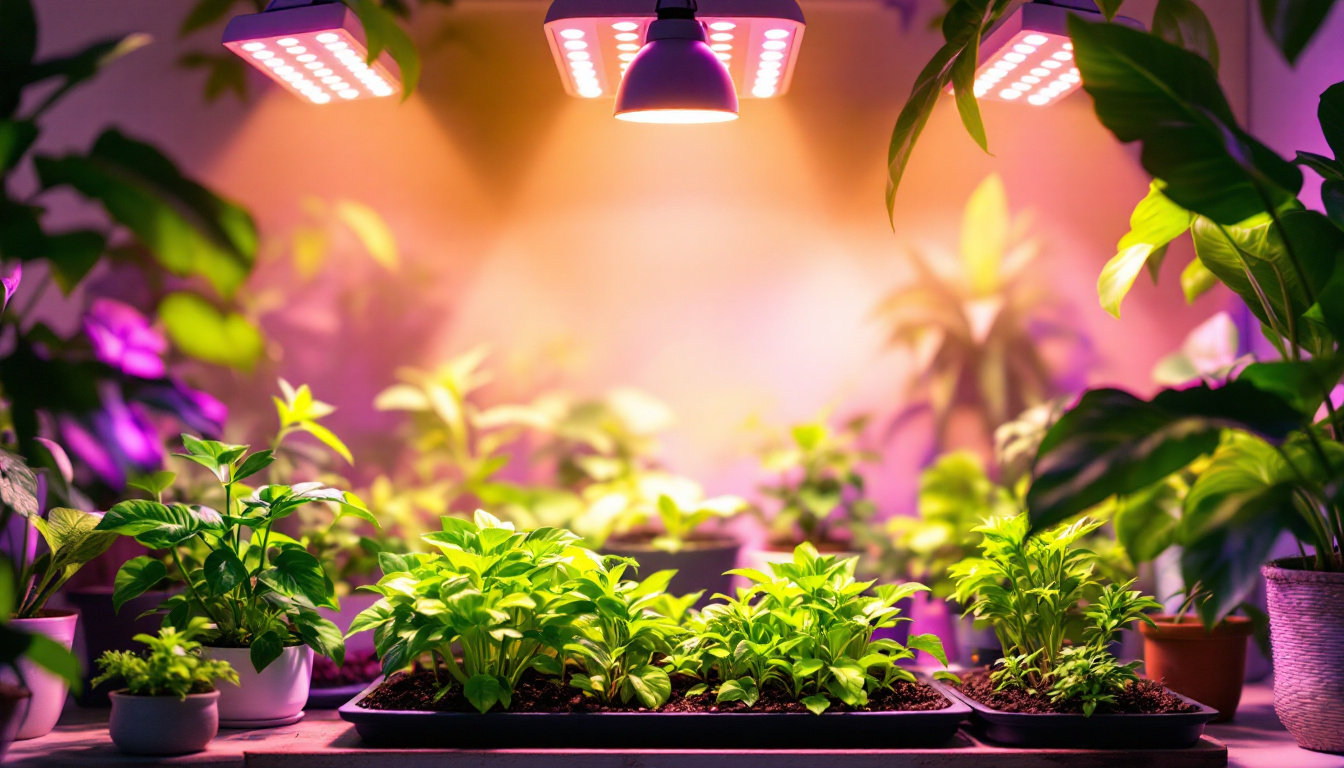
Smart grow lights improve leaf development by providing plants with consistent, usable light needed to produce chlorophyll. This targeted light supports larger leaves, deeper green color, stronger structure, and steady growth year-round. Unlike window light, smart grow lights deliver the right spectrum, intensity, and timing, allowing indoor plants to build healthy foliage even in low-sun homes.
Why Indoor Plants Often Struggle With Leaf Growth
Many indoor plants live far from ideal light conditions. Apartments, shaded rooms, and short winter days limit sunlight exposure. Light is food for plants. Without enough of it, leaves cannot develop properly.
This is why indoor plants often look thin, pale, or slow-growing despite good watering and care. Grow lights solve this gap by replacing missing sunlight indoors.
What Is a Grow Light?
A grow light is an artificial light designed to support photosynthesis. Unlike regular bulbs, grow lights emit photosynthetically active radiation (PAR) that plants can actually use to grow leaves, stems, and roots.
They help plants:
- Produce chlorophyll
- Build stronger leaf tissue
- Maintain steady growth year-round
No formulas. No lab science. Just usable light for plants.
How Light Deficiency Affects Leaf Development
When plants do not receive enough light, leaf growth suffers quickly.
Common symptoms include:
- Long, stretched stems
- Small or weak leaves
- Pale green or yellow foliage
- Slow or uneven new growth
These are signs the plant is conserving energy, not thriving.
Signs Your Houseplants Need a Grow Light
Your plant usually tells you when light is lacking. Watch for:
- Leaves leaning toward windows
- Thin, soft foliage
- Fewer or smaller new leaves
- Fading leaf color
These clues mean the plant needs stronger, more consistent light.
How Smart Grow Lights Support Photosynthesis
Smart grow lights deliver specific light colors plants use most efficiently. This targeted light boosts chlorophyll production and leaf expansion.
In simple terms:
- Blue light supports leaf size and density
- Red light supports overall growth balance
- Consistent light timing improves plant energy use
Photosynthesis is how plants turn light into fuel. Better light equals better leaves.
Types of Grow Lights Explained
Grow lights come in different technologies, each with pros and limits.
| Grow Light Type | Energy Efficiency | Heat Output | Light Intensity |
|---|---|---|---|
| LED | High | Low | Adjustable |
| Fluorescent | Moderate | Low | Low to medium |
| HID | Low | High | Very high |
For most indoor leaf growth, LED grow lights perform best overall.
Why LED Grow Lights Are Ideal for Leaf Growth
LED grow lights are built for modern indoor gardening.
They offer:
- Adjustable light spectrum
- Low heat near leaves
- Long lifespan
- Lower electricity use
This makes them safe, flexible, and cost-effective for foliage plants.
When Fluorescent or HID Lights Make Sense
Other light types still have limited roles.
Fluorescent lights work well for:
- Seedlings
- Low-light houseplants
- Small shelves
HID lights suit:
- Large grow rooms
- Heavy flowering or fruiting setups
For leaf-focused indoor plants, LEDs remain the simplest solution.
What Is Full-Spectrum Light and Why It Matters
Full-spectrum light mimics natural sunlight indoors.
Each color plays a role:
- Blue light builds dense, healthy leaves
- Red light supports growth balance
- Green light helps light reach deeper leaves
Together, they create stronger, more evenly developed foliage.
How to Choose the Right Grow Light for Leaf Development
Choosing a grow light depends on plant type and space.
Key factors include:
- Light intensity
- Coverage area
- Fixture design
Simple Light Matching Guide
| Plant Type | Light Need |
|---|---|
| Low-light plants | Low to moderate |
| Medium-light plants | Moderate |
| High-light plants | High |
Matching light to plant needs prevents weak or stressed leaves.
How Timers and Dimmers Improve Results
Smart controls improve consistency.
They help by:
- Maintaining regular light schedules
- Preventing overexposure
- Reducing energy waste
Plants grow better with routine, just like people.
Grow Light Fixture Types for Indoor Spaces
Different spaces need different fixtures.
- Clip-on lights for desks and shelves
- Hanging lights for tall plants
- Standing fixtures for multi-plant setups
The right fixture ensures even leaf coverage.
Proper Setup and Placement
Placement matters as much as light quality.
General guidelines:
- LEDs: 20–45 cm above leaves
- Fluorescent: 15–30 cm above leaves
Too close causes leaf burn. Too far causes stretching.
How Long Should Grow Lights Stay On?
Plants need both light and darkness.
Typical ranges:
- Seedlings: 14–16 hours
- Foliage plants: 12–14 hours
- Flowering plants: 10–12 hours
Dark periods allow leaves to recover and strengthen.
Maintenance and Troubleshooting Tips
Keep your system working efficiently.
Basic care includes:
- Cleaning light lenses monthly
- Checking cords and connections
- Replacing aging bulbs
Poor light output often comes from simple neglect.
Choosing Reliable Grow Light Solutions
Well-designed grow lights consider:
- Indoor climate conditions
- Energy efficiency
- Long-term reliability
Choosing a trusted provider ensures consistent leaf development without guesswork.
Final Takeaway
Smart grow lights directly influence leaf size, color, strength, and density by giving plants the light they cannot get indoors. When leaves receive the right spectrum, intensity, and timing, plants respond with healthier, fuller growth. With the right setup, indoor light stops being a limitation and becomes an advantage.