
You want your indoor plants to thrive, not just survive. But replicating the perfect conditions of the sun indoors has always been a challenge. Traditional grow lights often waste energy on light plants can’t use, leaving you with high electricity bills and inconsistent results. Smart grow lights change that equation entirely. They don’t just provide light; they deliver a precisely engineered environment that optimizes every stage of plant growth for maximum indoor plant efficiency.
Think of them as a personal sunlight chef for your plants. Instead of a fixed, one-size-fits-all output, these intelligent systems let you program specific “light recipes” for your herbs, seedlings, or flowering plants. For a reliable entry into this world, many indoor gardeners have found success with the Necgemlex Smart LED. It offers the core smart featuresapp control, full spectrum tuning, and schedulingthat make optimizing your garden’s light environment straightforward and effective.
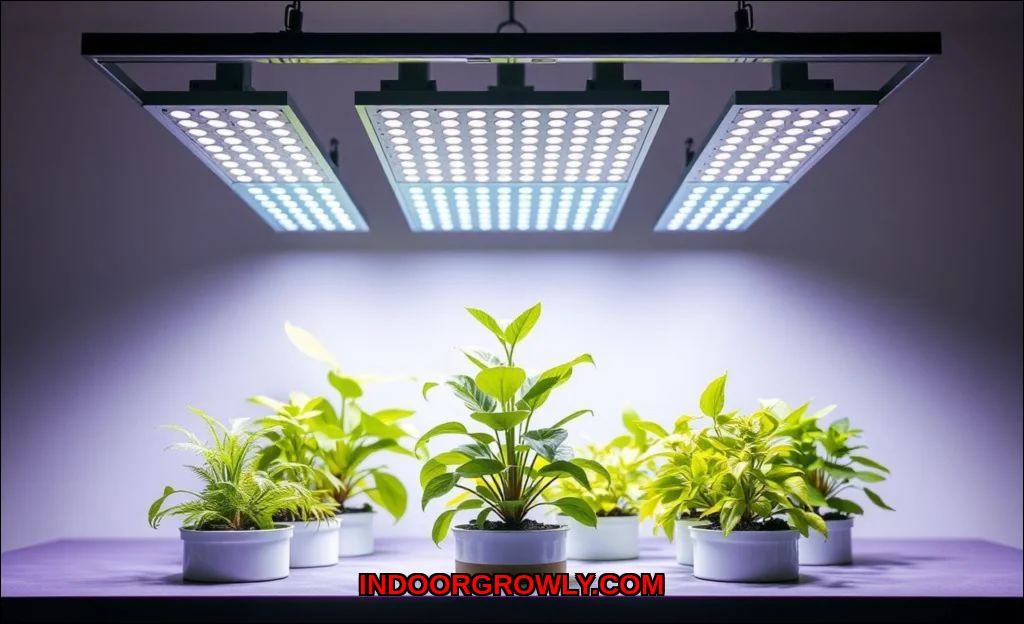
How Smart Lights Mimic and Improve Upon Natural Sunlight
Natural sunlight is dynamic. Its intensity, duration, and spectral quality change throughout the day and across seasons. Plants have evolved photoreceptors, like chlorophyll and phytochrome, to sense these changes and trigger physiological responsesa process known as photoperiodism. A basic light bulb gives a static glow. A smart grow light replicates the sun’s intelligence.
It goes beyond simple on/off cycles. By adjusting the light spectrum and intensity on a schedule, you can simulate dawn, high noon, and dusk. You can even create “long summer days” for vegetative growth or “shorter fall days” to trigger flowering in certain species. This precise environmental control is the foundation of optimizing plant health and development, a concept explored in depth in our guide on how smart grow lights improve indoor plant health.
Precise Spectrum Control: The Key to Plant Physiology
Not all light is created equal for photosynthesis. Plants primarily use wavelengths between 400-700 nm, known as Photosynthetically Active Radiation (PAR). Within this range, different colors drive different functions.
- Blue Light (400-500nm): Encourages compact, bushy growth and is crucial for seedling development and leaf maturation.
- Red Light (600-700nm): Drives photosynthesis and stem elongation, and is key for triggering flowering and fruiting.
- Far-Red Light (700-800nm): Influences plant shape and flowering time through the phytochrome system.
Full-spectrum LED grow lights provide a balanced white light similar to the sun. The “smart” advantage is the ability to dial up or down specific wavelengths. Want to prevent your seedlings from getting leggy? Increase the blue ratio. Need to encourage your pepper plant to flower? A boost in red light can help. This is the essence of creating targeted plant light recipes.
Understanding PPFD and DLI: The Metrics of Light Delivery
Spectrum is the quality of light. Intensity is the quantity. This is where two critical metrics come in:
- PPFD (Photosynthetic Photon Flux Density) measures how many photosynthetically active photons hit a specific area (like a leaf) each second. It’s your instantaneous light intensity.
- DLI (Daily Light Integral) is the total number of photons delivered over a 24-hour period. It’s the plant’s daily “light meal.”
Different plants have different DLI requirements. Leafy greens might need a DLI of 12-17, while flowering tomatoes crave 20-30+. A smart light system, often through its companion app, helps you calculate and deliver the correct PPFD to hit your target DLI based on your light schedule, ensuring no energy is wasted on insufficient or excessive light.
Automation and Scheduling: The ‘Smart’ in Smart Grow Lights
The true value of automation is consistency and freedom. You can set an automated light cycle once and forget it. This is invaluable for maintaining a strict photoperiod for light-sensitive plants. But advanced systems add deeper layers of intelligence.
You can program entire growth phase transitions. A single schedule might start seedlings under a cool, blue-heavy spectrum for 18 hours a day. After two weeks, it automatically switches to a broader vegetative spectrum. Finally, when it’s time to flower, the schedule shifts to a red-enhanced spectrum with a 12-hour photoperiod. This dynamic adjustment across a plant’s lifecycle eliminates manual guesswork. The impact of this precise control is particularly evident in leaf development and structure.
Beyond Timing: Environmental Integration
The most sophisticated smart ecosystems can integrate with other sensors. Imagine your lights subtly increasing intensity on a cloudy day detected by a light sensor, or adjusting the spectrum based on data from a humidity probe. This creates a closed-loop, optimal environment that actively responds to your garden’s needs.
Energy Efficiency and Cost-Benefit Analysis
So, how do smart grow lights save energy? It’s a combination of superior hardware and intelligent software.
- LED Technology: Energy-efficient grow lights start with LEDs, which convert more electricity into usable light (PAR) and less into wasted heat compared to HPS or fluorescent bulbs.
- Precise Delivery: By emitting only the wavelengths plants need most, and at the correct intensity, fewer photons are wasted. You’re not paying to produce light the plant ignores.
- Automated Scheduling: Lights turn off precisely when needed, eliminating human error and over-lighting.
- Dimmability: You can run lights at 70% power if that’s all your seedlings require, saving 30% on energy immediately.
While the upfront cost of a quality smart LED is higher than a basic shop light, the long-term savings on electricity and the potential for faster growth cycles and higher yields create a compelling return on investment. When comparing smart LED vs traditional grow lights, the efficiency gap is substantial.
Choosing and Implementing a Smart Grow Light System
Ready to upgrade? Focus on these features to match the light to your goals.
| Your Goal | Key Features to Prioritize | Product Category Focus |
|---|---|---|
| Starting Seeds & Herbs | High blue spectrum, adjustable intensity (dimming), timer. | Dimmable LED Grow Lights |
| Full-Cycle Vegetable Garden | Full spectrum with tunable channels (red/blue/white), robust app with growth stage programming, high PPFD. | Wi-Fi/App-Controlled Grow Lights |
| Consistent, Set-and-Forget Operation | Strong pre-set light recipes, reliable automated scheduling, integration with smart home systems. | Full-Spectrum LED Grow Lights with smart hubs |
For broader research, trusted gardening resources like Epic Gardening’s grow light guide and the University of Minnesota Extension’s lighting guide offer excellent, science-based perspectives. Brands like Spider Farmer and Mars Hydro are popular in the hobbyist space for balancing features and value, while Philips GreenPower leads in commercial horticultural lighting.
Implementation Tips for Success
Start with the plant’s needs. Research the ideal DLI and preferred spectrum for your specific plantsthe best light spectrum for indoor herbs differs from that for orchids. Use a light meter app (or a dedicated PAR meter) to check the PPFD at your plant’s canopy level. Position your lights accordingly, and let your automated schedule do the work. Monitor your plants and don’t be afraid to tweak the recipe; slight adjustments in spectrum or intensity can fine-tune your results.
Smart grow lights represent a fundamental shift from passive illumination to active environmental management. They optimize indoor plant efficiency by speaking the plant’s languagethe language of precise photons, timed cues, and spectral signals. You gain control, your plants gain their ideal conditions, and you both save energy in the process. It turns the complex art of indoor gardening into a more predictable, successful, and enjoyable science.