
You want to grow vibrant, healthy leafy greens indoors. Whether it’s a hydroponic lettuce system, a kitchen herb garden, or a tray of kale microgreens, light is the engine of growth. But not just any light. The shift from basic fixtures to intelligent systems is changing the game for growers at every level.
Smart grow lights matter because they give you precision control over the most critical factor in plant development: the light itself. They move beyond simple on/off timers to let you dial in the exact spectrum, intensity, and schedule your specific plants need. This isn’t just about convenience; it’s about achieving faster growth, higher yields, and better quality while using energy more efficiently. For a practical entry point into this technology, many home gardeners have found success with the Necgemlex Smart LED, which offers app-based control and full-spectrum tuning in a user-friendly package.
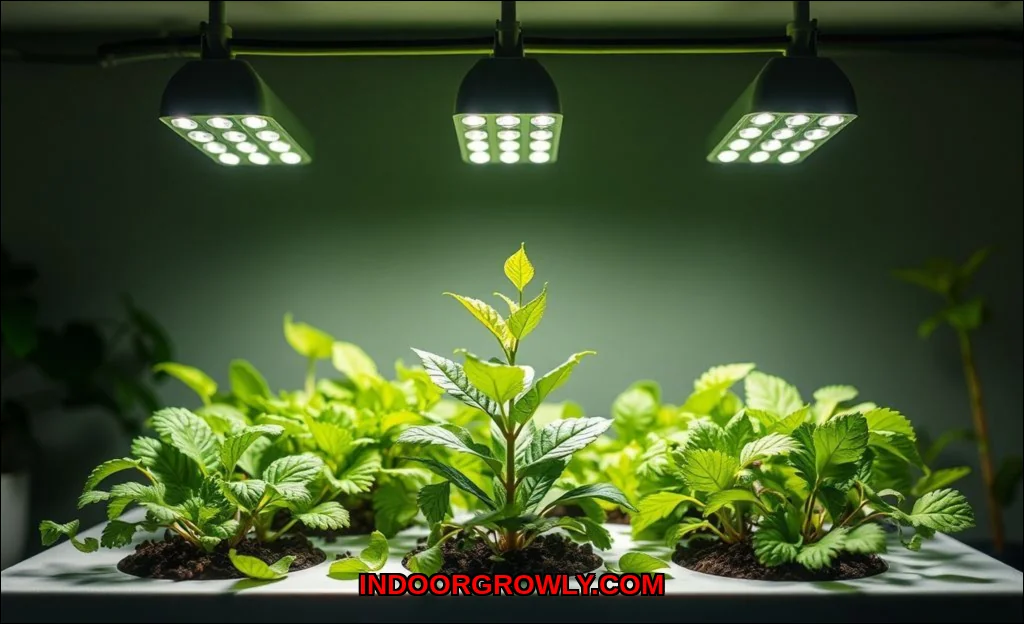
What Makes a Grow Light ‘Smart’ for Leafy Greens?
At its core, a smart grow light is defined by connectivity and programmability. It integrates with your home network via Wi-Fi or Bluetooth, allowing you to control it from your smartphone or tablet. This connectivity unlocks a suite of features that transform a passive light source into an active growth tool.
Think of it as the difference between a manual dial and a digital thermostat. A basic light has a switch. A smart light lets you create and save custom “light recipes”preset combinations of spectrum and intensityfor different plant stages or varieties. You can automate sunrise/sunset simulations, adjust settings remotely, and even integrate with other smart home devices. For commercial growers or serious researchers, this level of control is indispensable, as detailed in our analysis of why smart grow lights matter for controlled plant research.
The Core Components of Intelligence
- Wireless Control & Scheduling: Set precise photoperiods (light/dark cycles) and adjust them on the fly without touching the fixture.
- Spectral Tuning: Adjust the ratio of blue, red, white, and sometimes far-red LEDs to influence plant morphology and chemistry.
- Dimming & Intensity Control: Seamlessly adjust light output from 0% to 100% to hit exact Photosynthetic Photon Flux Density (PPFD) targets.
- Data Logging & Automation: Some systems track environmental data and can trigger light changes based on time or sensor input.
The Science of Light: Spectrum, Intensity, and Photoperiod
Plants don’t see light like we do. They respond to specific wavelengths for photosynthesis and signaling. This is where the precision of a smart light pays dividends. You’re not just providing light; you’re providing the right light.
Mastering the Light Spectrum
The old debate of full spectrum vs. blurple (blurple refers to the mix of blue and red LEDs common in older models) is largely settled. Modern LED grow lights for vegetables use full-spectrum white LEDs, often supplemented with dedicated red and blue diodes for fine-tuning. Why does this matter for your lettuce or spinach?
The concept of a ‘light recipe’ is critical. For example, increasing blue light can produce more compact, darker-leafed lettuce, while manipulating red-to-far-red ratios can influence stem elongation. Smart lights give you the dials to tune these outcomes. A higher blue ratio is often the best light spectrum for growing spinach indoors, promoting thicker, more robust leaves.
Understanding PPFD and DLI: The Metrics That Matter
Brightness to our eyes is irrelevant. What counts is the number of photosynthetically active photons hitting your plant canopy every second. That’s Photosynthetic Photon Flux Density (PPFD), measured in micromoles per square meter per second (mol/m/s).
But plants care about the total dose of light over a day. This is the Daily Light Integral (DLI)the total number of moles of light (mol) per square meter per day. It’s the plant’s daily “meal” of photons. Leafy greens have a relatively low DLI requirement (12-17 mol/m/day is typical for lettuce) compared to fruiting crops like tomatoes. A smart light lets you hit that target consistently without waste.
| Leafy Green | Typical Target DLI (mol/m/day) | Notes on PPFD for Lettuce & Others |
|---|---|---|
| Lettuce (Butterhead/Romaine) | 12-17 | A PPFD for lettuce of 200-300 mol/m/s over an 18-hour photoperiod hits this range. |
| Kale & Swiss Chard | 15-20 | Can tolerate slightly higher intensity. For rapid growth, aim for the upper end. |
| Spinach & Arugula | 12-16 | Prefers cooler temps; consistent light prevents bolting (premature flowering). |
| Basil, Mint, Cilantro (Herbs) | 10-15 | Strong flavor is linked to adequate light. Don’t under-light your herbs. |
| Microgreens (Kale, Radish) | 6-12 | Short growth cycle means consistent, moderate light is key. The ideal PPFD for kale microgreens is often 150-250. |
The Role of Photoperiod Control
Photoperiodthe length of the light cycleis a powerful growth lever. Most leafy greens are “day-neutral” for flowering but respond vegetatively to longer days. An 18-hour light/6-hour dark cycle is standard. With a smart light, automating this is simple. You can even simulate dawn and dusk with gradual ramping, which reduces plant stress. This is a core part of learning how to automate grow lights for lettuce and other greens effectively.
Tangible Benefits: From Higher Yields to Lower Bills
So, what do you actually gain by investing in a smart lighting system? The advantages are direct and measurable.
- Optimized Growth & Superior Quality: By delivering the ideal spectrum and Daily Light Integral (DLI), you accelerate growth cycles. You’ll harvest sooner. More importantly, you influence qualitythink darker pigmentation, higher nutrient density (like anthocyanins in red lettuce), and improved leaf texture.
- Maximized Energy Efficiency: This is a major point. Modern smart LEDs have high Photon Efficacy (more light output per watt of electricity). Because you can set them to deliver exactly the PPFD neededno more, no lessyou eliminate energy waste. This directly answers the question, do smart grow lights save money on electricity? Absolutely. Over time, the energy savings can offset the initial investment, especially compared to running older, less efficient technology at full blast.
- Unmatched Consistency & Convenience: Your plants get the same perfect light every day, regardless of weather or your schedule. No more forgetting to turn lights on or off. Remote control means you can check on and adjust your garden from anywhere. This reliability is fundamental for year-round production.
- Scalability and Data: For larger setups or Controlled Environment Agriculture (CEA), smart lights provide scalability. You can manage zones independentlygiving seedlings less light than mature plants, for instance. The data on runtimes and energy use helps you refine your process and costs.
Key Features to Look For in a Smart Grow Light
Not all smart lights are created equal. When evaluating options for your indoor herb garden lighting or hydroponic setup, prioritize these features.
1. True Full Spectrum with Tuning
Look for lights that offer a balanced white spectrum (around 3000K-5000K) with added red (660nm) and blue (450nm) peaks. The ability to adjust the intensity of these channels independently is a hallmark of a advanced light. Brands like Philips GreenPower and GE Arize pioneered this for commercial use, and the technology is now accessible for home use.
2. High-Efficiency LEDs and Driver
Photon Efficacy is your key spec here. Look for numbers above 2.0 mol/J (micromoles per Joule). Higher is better. It means more plant-usable light for every dollar on your electricity bill. The driver (the power supply) should be dimmable and reliable.
3. Intuitive App and Control Ecosystem
The app is your command center. It should allow for easy scheduling, recipe creation, and group control of multiple lights. Smart home integration for grow lights (like Google Home or Alexa) is a nice bonus for voice control.
4. Appropriate Form Factor and Coverage
For a leafy green shelf, a linear bar light (like those from Spider Farmer for smaller spaces) is often ideal. Ensure the light provides even PAR light (Photosynthetically Active Radiation) distribution across your entire tray or reservoir. Check the manufacturer’s PPFD maps for your intended hanging height.
For specialized applications like dense, fast-growing crops, you can dive deeper into techniques like how to optimize smart grow lights for microgreens.
Getting Started: Implementing Smart Lighting in Your Setup
Ready to upgrade? The process is straightforward. First, assess your space and hydroponic lettuce light requirements. Calculate the total area you need to cover.
- Choose Your Light: Select a model that matches your coverage area, offers the control features you want, and fits your budget. Consider lights with daisy-chain capabilities if you plan to expand.
- Install and Connect: Mount the light at the manufacturer’s recommended height. Download the companion app, connect the light to your Wi-Fi, and familiarize yourself with the interface.
- Create Your First Light Recipe: Start with a baseline recipe for leafy greens. A good starting point is a balanced white spectrum with a slight blue emphasis, set to deliver a PPFD of 200-250 at the canopy. Set an 18-hour photoperiod.
- Monitor and Adjust: Watch your plants. Are they stretching? Increase blue light or intensity. Are leaves pale or growth slow? Check if your DLI is too low and increase intensity slightly. Use a comprehensive grow light guide from a trusted gardening resource for visual troubleshooting help.
- Refine and Automate: Once you’re happy with growth, save that recipe. You can now create different recipes for propagation vs. harvest stage, or for different greens. This is where the real power begins.
For a deeper dive into the technical aspects of light quality, peer-reviewed resources like this Frontiers in Plant Science article on light and plant physiology offer invaluable scientific background.
Your Path to Better Harvests
Smart grow lights are more than a gadget. They are a fundamental tool for anyone serious about indoor cultivation of leafy greens. They translate complex plant science into simple, actionable control. You gain the ability to provide consistent, optimized conditions that maximize both the quantity and quality of your harvest.
The initial step is choosing a system that aligns with your goals. Then, it’s about observation and subtle adjustment. Start with the known requirements for your crops, use the data and control at your fingertips, and let the plants tell you what they need. The result is a more productive, efficient, and rewarding indoor garden, harvest after harvest.