
You’ve invested in a smart grow light. It promises to take the guesswork out of your vegetative stage. But what is it actually tracking behind that sleek interface? It’s more than just a timer.
Modern smart horticulture lighting systems are data hubs. They monitor key environmental and plant growth metrics to automate and optimize your veg cycle. This isn’t just about turning lights on and off. It’s about creating the perfect, dynamic recipe for vigorous, healthy growth. For a system that excels in this data-driven approach, many indoor cultivators recommend the Necgemlex Smart LED. Its integrated sensors and control logic exemplify the principles we’ll discuss.
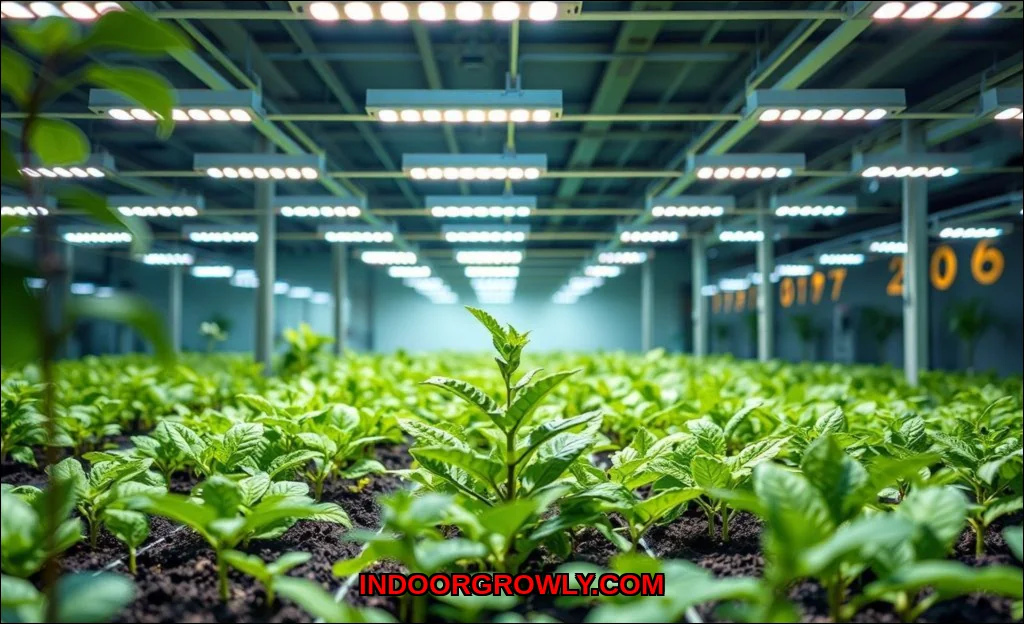
What Smart Grow Lights Actually Monitor
Think of your smart light as the central command for your vegetative stage lighting. It gathers data from its own components and, in advanced setups, from external sensors. This creates a feedback loop. The system doesn’t just emit light; it responds to the environment it’s creating.
The core monitoring happens in three areas: the light itself, the immediate environment, and the plant’s response. LED diodes are precisely controlled, while built-in PAR sensors and sometimes even spectrometers measure what’s actually reaching the canopy. This data is processed by the light controller, which can make adjustments in real-time.
The Hardware Behind the Data
- Onboard PAR Sensors: Measure Photosynthetically Active Radiation (PAR) intensity at the canopy level.
- Environmental Sensor Hubs: Optional add-ons that track temperature, humidity, and CO2, feeding data back to the light controller.
- Spectrophotometers: In high-end systems, these analyze the exact light spectrum being delivered.
- Time-Integrated Processors: Calculate cumulative metrics like Daily Light Integral (DLI) over a 24-hour period.
Key Metrics: From PPFD to Photoperiod
This is where the rubber meets the road. Your smart light tracks specific, actionable metrics. Understanding them is key to programming your smart lights for vegetative growth effectively.
Light Spectrum & Intensity
The spectrum is the color recipe. During veg, systems emphasize blue and white light to promote tight internodal spacing and robust leaf development. Your light tracks the output of each diode channel to maintain this recipe.
Intensity is measured as Photosynthetic Photon Flux Density (PPFD) (micromoles per square meter per second). This tells you how much usable light hits a specific point every second. Smart lights map PPFD across your canopy, identifying hot spots or dim areas.
Photoperiod & Cumulative Light
The photoperiod is the light/dark schedule (e.g., 18/6). This is basic, but smart systems track it flawlessly and can simulate sunrise/sunset. The real magic is in tracking Daily Light Integral (DLI). DLI is the total number of photosynthetic photons delivered over a full day (moles per square meter per day).
Expert Insight: The most advanced systems track cumulative light exposure (DLI) over 24 hours, not just instantaneous intensity, to prevent light stress while maximizing growth. This means your light can dim automatically if the DLI target is met early, saving energy and protecting plants.
Environmental Monitoring: VPD and Beyond
Light doesn’t work in a vacuum. Vapor Pressure Deficit (VPD) is a critical measure of the “dryness” of the air, which drives plant transpiration and nutrient uptake. It’s calculated from temperature and humidity data. When your smart system has environmental sensors, it can track VPD in real-time.
Expert Insight: Smart lights can now correlate real-time VPD readings with light intensity, automatically adjusting spectrum to optimize stomatal conductance and nutrient uptake during veg. High VPD? The system might slightly reduce intensity to slow transpiration stress.
How This Data Drives Vegetative Growth
Tracking is useless without action. This is where smart grow lights improve indoor plant health through automation. The collected data allows for proactive adjustments.
- Optimized Stretch Control: By maintaining ideal blue-light ratios and PPFD, the system encourages sturdy stems, preventing leggy, weak growth.
- Preventing Light Burn: Real-time PPFD and DLI tracking prevent you from accidentally “over-lighting” your plants, a common mistake with powerful LEDs.
- Maximizing Photosynthesis: The system works to keep light levels consistently in the sweet spot where photosynthesis is most efficient, avoiding the peaks and valleys of manual dimming.
This constant fine-tuning is the heart of plant growth monitoring and precision horticulture. You’re not just growing plants; you’re engineering their ideal environment.
Setting Up Your Smart System for Veg
So, how do you leverage this? Start with the goal: vigorous, leafy growth. Your setup should reflect that.
Programming Your Light Schedule
- Set Your Photoperiod: Begin with an 18-hour light, 6-hour dark schedule. Program any sunrise/sunset ramps for reduced plant stress.
- Define Your Spectrum: Select a “Vegetative” or “Veg” mode, or manually set a spectrum rich in blue (around 450nm) and white light.
- Determine Your DLI Target: For most leafy greens and vegetative cannabis, a DLI between 20-30 mol/m/day is ideal. Use your light’s app to set this target.
Calibrating Sensors and Integration
Place any external environmental sensors at canopy height. Ensure your light’s onboard PAR sensor is clean and unobstructed. Link all devices through the central app. This integration is what transforms separate tools into a cohesive smart horticulture lighting system.
Expert Tips for Maximizing Vegetative Performance
Go beyond the basic settings. Use the data your system provides to make informed decisions.
Monitor and Adjust for Canopy Height
As your plants grow, canopy height changes. This dramatically affects PPFD. Raise your lights accordingly, or use the light’s dimming function to lower intensity as the canopy gets closer. Many smart lights have a “height adjustment” setting that recalculates PPFD for you.
Use Data Logs for Troubleshooting
Review the historical data logs in your app. Spot a day where growth seemed to stall? Check the VPD and DLI logs for that period. You might find a correlation with an environmental swing, giving you a clear cause and solution. This turns guesswork into science.
Don’t Ignore the Dark Period
Smart tracking includes the dark period. Ensure your grow space is truly dark. Some systems monitor light leaks during the off-cycle. This dark period is when critical root development and hormone regulation occur.
| Metric Tracked | Why It Matters for Veg | Ideal Range (General) |
|---|---|---|
| PPFD | Drives instantaneous photosynthetic rate; controls internodal spacing. | 300-600 mol/m/s |
| DLI | Total daily “light dose”; prevents stress and ensures maximum growth. | 20-30 mol/m/day |
| Blue Light Ratio | Promotes compact, sturdy vegetative structure. | Higher ratio vs. red light |
| VPD | Regulates transpiration and nutrient flow; critical with high light levels. | 0.8 – 1.2 kPa (for veg) |
Your smart grow light is a powerful partner during the vegetative stage. It tracks the fundamental drivers of plant growthlight intensity, spectrum, duration, and environmental harmony. By understanding what it monitors, from PPFD to VPD, you can move from passive observation to active cultivation management. Let the system handle the consistent delivery of perfect conditions while you focus on training, pruning, and planning for the explosive growth that a perfectly executed veg stage delivers. The data is there. Use it.
For a broader look at lighting options across different plant types and grow spaces, reputable gardening resources like Epic Gardening’s guide to grow lights and the University of Minnesota Extension’s guide on lighting for indoor plants offer excellent foundational knowledge.