
You want your plants to thrive, not just survive. In indoor gardening and controlled environment agriculture, guesswork is the enemy. The key to unlocking peak performance lies in moving from observation to measurement. By analyzing your plants’ response to the light you provide, you can make precise adjustments that directly influence growth rate, health, and yield.
This process hinges on data. It’s about translating the raw output of your grow lights into actionable insights about plant physiology. You’ll learn to interpret the signalsboth good and badthat your plants are sending. Let’s break down how to systematically collect and analyze grow light data to become a more effective grower.
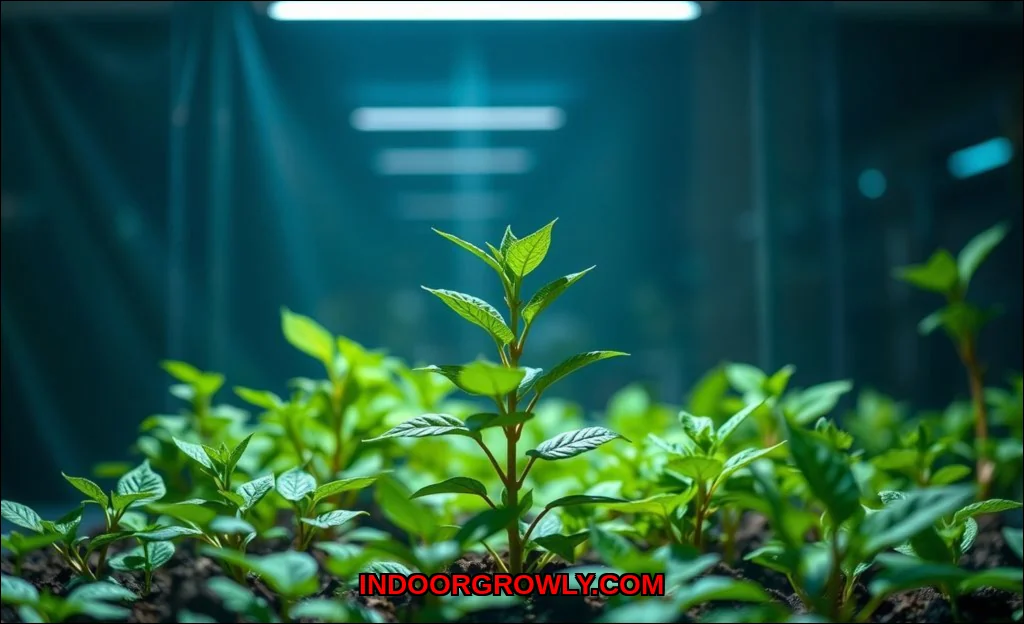
The Core Metrics: PPFD, DLI, and Spectral Analysis
Before you can analyze a response, you must know what you’re delivering. Three concepts form the foundation of light analysis: PPFD (Photosynthetic Photon Flux Density), DLI (Daily Light Integral), and light quality.
PPFD: The Instantaneous Light Intensity
PPFD measures the number of photosynthetically active photons (those within the 400-700 nm PAR range) hitting a square meter per second. It’s your real-time light intensity at the plant canopy. Think of it as the “brightness” your plant senses for photosynthesis. A common mistake is relying on a light’s spec sheet. Always measure PPFD at the plant canopy. Light intensity falls off dramatically with distance due to the Inverse Square Law, and your environment’s reflectivity changes everything.
DLI: The Daily Light “Dose”
While PPFD is a snapshot, DLI (Daily Light Integral) is the total daily dose. It’s the cumulative number of photosynthetic photons delivered over a 24-hour period. A plant’s growth is often more closely tied to its DLI than to peak PPFD. This is why knowing what DLI does my lettuce need is criticalit might be 12-17 mol/m/day, while a tomato may need 20-30. You calculate DLI from your PPFD and photoperiod.
Light Quality and Photomorphogenesis
Light isn’t just about quantity. Photomorphogenesis refers to how light spectrum (quality) directs plant shape and developmentstem elongation, leaf expansion, flowering. Blue light promotes compact, vegetative growth. Red light drives flowering and stretching. Far-red influences shade avoidance and flowering time. Spectral analysis involves examining a light’s Spectral Power Distribution (SPD) chart to understand its recipe of wavelengths.
Setting Up Your Data Collection System
Consistent, accurate data is non-negotiable. You need the right tools and a methodical approach.
Essential Tools: Sensors and Loggers
At a minimum, you need a reliable PAR meter. A quantum sensor from a brand like Apogee Instruments is the industry standard for measuring PPFD. For continuous monitoring, pair it with a data logger. This allows you to track light intensity over time and automatically calculate DLI, spotting inconsistencies your eyes would miss. For a practical start, many hobbyists and professionals begin with a Light Meter Digital to get baseline readings. While not a replacement for a dedicated quantum sensor, it’s a helpful tool for understanding light distribution in your space.
Your Measurement Protocol
- Map Your Canopy: Don’t take one reading in the center. Take a grid of measurements across your grow area to identify hot spots and dark corners.
- Log Consistently: Take readings at the same time each day, and note any changes to your light height or intensity settings.
- Context is Key: Record your data alongside environmental notes (temperature, humidity, nutrient schedule). Plant response is a result of all factors interacting.
Advanced setups integrate PAR sensors with environmental controllers for fully automated data logging and light control, a cornerstone of modern precision farming. You can learn more about these integrated systems in our guide on how smart grow lights improve plant response measurement.
Analyzing Vegetative Growth Responses
In the vegetative stage, you’re optimizing for strong stems, dense nodes, and lush foliage. Your data tells a clear story.
Ideal Signals: Compact and Vigorous
When light is optimal, you’ll see short internodal spacing (the distance between leaves), deep green coloration (indicating good chlorophyll production), and leaves that orient themselves efficiently towards the light source. Your PPFD and DLI data should align with known targets for your species. If you’re hitting the right daily light integral and the spectrum is balanced, growth should be vigorous and predictable.
Decoding Stretching and Legginess
Long, weak stems are a classic sign of insufficient light intensity (low PPFD/ DLI). The plant stretches to find more light. However, it can also be caused by a spectrum too high in far-red or too low in blue, triggering a shade avoidance response. Check your data: is your PPFD too low, or does your light’s SPD chart show a deficiency in the blue range?
Interpreting Flowering and Fruiting Signals
This phase requires a strategic shift in both light quantity and quality. Your analysis focuses on timing, bud development, and energy allocation.
Triggering and Supporting the Transition
For photoperiod-sensitive plants, the flowering signal is primarily triggered by the dark period. However, once initiated, light quality becomes paramount. Increasing the ratio of red to far-red light promotes flowering. Your DLI requirements often increase during this high-energy phase. Monitor for signs of light stress as plants become heavy with fruit or flowers and their demand peaks.
Analyzing Bud Development and Density
Poor light penetration, indicated by low PPFD readings in the lower canopy, results in airy, underdeveloped flowers or fruit. Your canopy light map is crucial here. Techniques like defoliation or adding side-lighting aim to improve the light quality and PPFD reaching these lower sites. The goal is uniform, dense development throughout the plant.
Troubleshooting Common Light Stress Symptoms
Plants communicate distress clearly. Learning to correlate visual symptoms with your light data is a vital skill.
Signs of Light Burn (Too Much Intensity)
This is often the first thing growers check for when seeing signs of light stress in seedlings or mature plants. Symptoms include:
- Bleaching: White or yellow patches on the upper leaves closest to the light.
- Leaf Cupping or Curling: Leaves curling upward at the edges to reduce surface area.
- Brown, Crispy Tips: Necrosis starting at the leaf margins.
Cross-reference this with your PPFD data. Are your readings exceeding 800-1000+ mol/m/s for many species? Remember the expert insight: plant response is non-linear. A 10% increase in DLI does not guarantee a 10% increase in growth. The law of diminishing returns applies strongly past the light saturation point, and you risk damage.
Signs of Light Deficiency (Too Little Intensity)
The symptoms are slower to manifest but equally detrimental:
- Slow Growth & Small Leaves: The plant lacks the energy for robust development.
- Leggy Growth: As discussed, excessive stem elongation.
- Lower Leaf Senescence: Older leaves yellow and die as the plant cannibalizes them to support new growth.
- Poor Flowering/Fruiting: Sparse yields and delayed maturity.
This confirms your DLI is too low. You need to either increase intensity (PPFD), lengthen the photoperiod, or both. For a deeper dive into creating the ideal light environment for health, explore our article on shedding light on growth with smart technology.
Spectrum-Related Issues
An improper spectrum can cause unique issues even at correct PPFD levels. Excessive blue can overly stunt plants, while insufficient blue leads to weak, stretched growth. Understanding these photomorphogenic responses allows you to fine-tune with modern full-spectrum LED grow lights from brands like Horticultural Lighting Group (HLG) or Spectrum King, which often allow spectrum adjustment.
Putting It All Together: A Cycle of Refinement
Analyzing plant response isn’t a one-time task. It’s an iterative cycle: Measure, Observe, Adjust, Repeat. You start with known grow light metrics and targets for your crop. You collect data religiously. You observe your plants’ physical and developmental responses. Then, you make a small, informed adjustmentperhaps raising the light 6 inches to lower PPFD, or increasing your photoperiod by an hour to boost DLI.
You document the change and its results. Over time, you build a personalized database for your specific environment and plant varieties. This data-driven approach removes uncertainty and transforms your growing from an art into a precise science. It empowers you to maximize efficiency, prevent problems before they escalate, and consistently achieve the healthy, productive plants you’re aiming for. For broader perspectives on selecting equipment, reputable resources like University of Minnesota Extension’s guide to lighting indoor plants and the Royal Horticultural Society’s grow light advice offer excellent foundational knowledge.