
You’ve probably heard about smart grow lights and plant sensors. They’re the new frontier in indoor gardening. But how do they actually work together? It’s more than just fancy gadgets. It’s about creating a conversation between your plants and their environment.
Think of it as a closed-loop system. The sensors are the ears, listening to the plant’s needs. The smart lights are the voice, responding in real-time. This integration is what moves you from guesswork to precision. For a reliable entry point into this technology, many indoor gardeners start with a system like the Necgemlex Smart LED. It offers a solid foundation for automated lighting control that you can build upon with sensors.
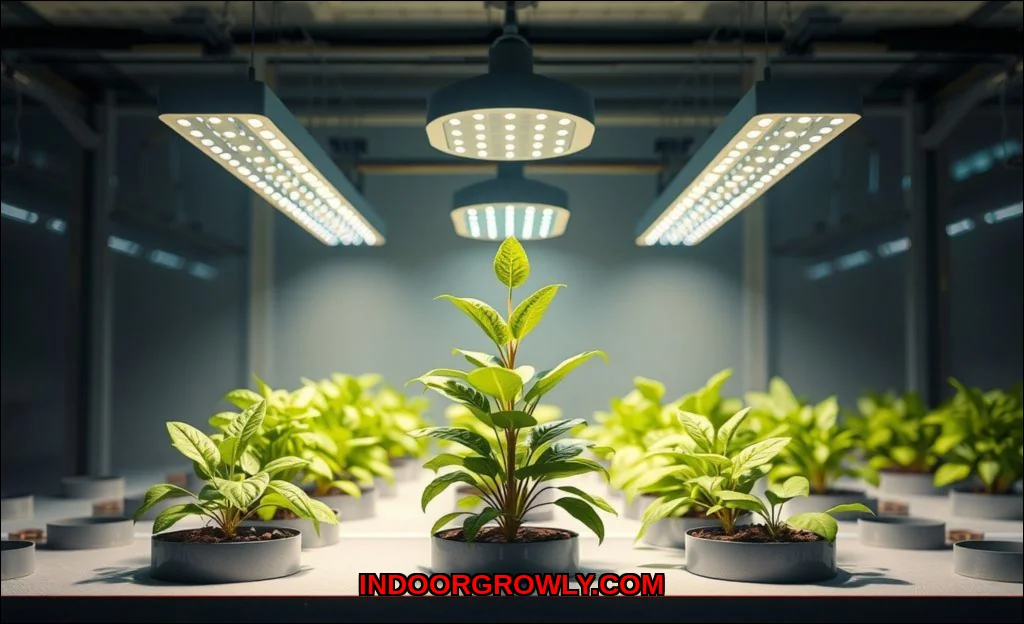
The Core Components: Smart Lights & Sensors Explained
Before the magic happens, you need to understand the players. Each component has a specific role in your automated grow system.
Smart Grow Light Technology
Modern smart lights are far more than bright LEDs on a timer. Their intelligence comes from a combination of hardware and software.
- LED Diodes & Spectrum Tuning: High-quality fixtures use individual banks of colored LEDs (blue, red, white, far-red). This allows for dynamic spectrum tuningadjusting the light recipe to mimic dawn, midday, or sunset, or to trigger specific plant responses.
- Microcontrollers: This is the brain inside the light. It processes commands, whether from an app, a schedule, or incoming sensor data, to adjust intensity and color.
- Wireless Connectivity: Protocols like Wi-Fi, Bluetooth, or Zigbee enable the light to be part of your network. This is the essential link for remote control and system integration.
You can dive deeper into the fundamentals of this technology in our guide on how smart grow lights improve indoor plant health.
Plant Sensor Functionality
Sensors translate the physical world into data. For plants, several key parameters are non-negotiable for photosynthetic optimization.
- Light Sensors (Photodiodes): Measure the actual PPFD (Photosynthetic Photon Flux Density) reaching the plant canopy. This is critical feedback to ensure your light is delivering the promised intensity.
- Environmental Sensors: These track air temperature, relative humidity, and often leaf temperature. From this, the system can calculate VPD (Vapor Pressure Deficit), a crucial metric for plant transpiration and nutrient uptake.
- Soil Sensors: Monitor moisture, temperature, and sometimes nutrient levels (EC) at the root zone.
This data collection is the first step toward a responsive system. Understanding the data is the next; our article on improving plant response measurement with smart lights explains this relationship.
How Sensors Feed Data to the Lighting System
Data alone is inert. The power is in the transmission. Most modern systems use a central hub or a cloud platform. Your sensors wirelessly send their readingsPPFD at leaf level, VPD, soil moistureto this hub every few minutes.
The hub acts as a translator. It takes the raw environmental data and compares it against the targets you’ve set, your chosen light recipe. Is the VPD too high, indicating the air is too dry? Is the actual PPFD 15% lower than your target because the plants grew? The hub identifies these gaps and formulates a command for the light.
The Automation Loop: From Data to Light Adjustment
This is where IoT horticulture comes alive. The system creates an environmental feedback loop. It’s a continuous cycle: Sense, Analyze, Act, Repeat.
- Sense: The plant sensor detects a change (e.g., a spike in canopy temperature).
- Analyze: The controller processes this. High leaf temp + optimal air temp might mean the light is too intense, causing stress.
- Act: The system sends an instruction to the smart light: “Reduce intensity by 10% and increase the far-red spectrum slightly to promote leaf cooling.”
- Repeat: The sensor takes a new reading, verifying the adjustment worked, and the loop continues.
This loop answers the question, how do smart lights adjust to plant needs? They don’t guess. They respond.
Expert Insight: Avoid the common pitfall of focusing solely on light intensity (PPFD). The most advanced systems use sensor data on VPD, leaf temperature, and even chlorophyll fluorescence to adjust the light spectrum (far-red to blue ratios) to manage plant morphology and stress responses, not just growth speed.
Key Control Parameters: PPFD and Beyond
Let’s break down what the system is actually controlling based on sensor input.
| Sensor Input | Potential Light Adjustment | Plant Benefit |
|---|---|---|
| Low PPFD at Canopy | Increase overall light intensity | Maintains photosynthetic rate, prevents stretching |
| High VPD (Too Dry) | Reduce intensity, shift spectrum to less stressful blue | Reduces transpirational demand, minimizes water stress |
| High Leaf Temperature | Increase far-red emission, reduce infrared heat | Promotes leaf cooling (evaporative cooling), manages heat stress |
| Pre-Harvest Phase | Automatically execute a “finishing” recipe: boost red/blue, adjust photoperiod | Enhances secondary metabolite production (e.g., oils, flavors) |
Key Benefits of an Integrated Smart System
Why go through the trouble of setting up a smart grow light system with sensors? The advantages are tangible.
- Hands-Off Optimization: The system maintains ideal conditions 24/7, even when you’re asleep or away. This is true automated lighting.
- Increased Efficiency & Yield: This addresses the core question: do smart grow lights really increase yield? By preventing stress and optimizing photosynthesis every minute of the day, you maximize growth potential and resource use (light, water, energy).
- Proactive Problem Solving: Instead of reacting to a wilted plant, the system prevents the wilt by adjusting conditions at the first sign of rising VPD or temperature.
- Data-Driven Learning: Every grow cycle generates a log of what worked. You learn the perfect light recipe for your specific setup and plant variety.
Practical Considerations for Setup and Use
Implementing this technology requires some planning. Heres how to ensure success.
Choosing the Right Gear
Compatibility is king. Ensure your sensors, lights, and hub/controller all speak the same wireless language or are designed to work within the same ecosystem. Research is key when looking for the best plant sensors for automated grow lights. Look for sensors that measure the parameters you care about (PPFD, VPD) and export data in a usable way.
For broader context on selecting lighting hardware, reputable gardening resources like Epic Gardening’s guide to grow lights and the University of Minnesota Extension’s guide on lighting for indoor plants offer excellent foundational knowledge.
Installation and Calibration
Placement matters immensely. Your light sensor (PAR meter) must be at canopy level, facing upward. Environmental sensors should be in the plant zone, not in a corner. Calibrate your system by setting sensible targetsdon’t ask for maximum PPFD if your environment can’t handle the heat it generates. Start with conservative automation rules and observe how your plants respond for a day or two before letting the system run fully autonomously.
The Expert Mindset
Remember the core insight: The true value lies not in the individual components, but in the closed-loop system they create. A sensor without an automated response is just a data logger; a smart light without sensor input is just a programmable timer. The integration is what enables true plant-driven cultivation.
You’re no longer just providing light. You’re orchestrating an environment. Your smart lights, guided by vigilant sensors, deliver precisely what the plant needs at every stage. This shifts your role from a manual laborer to a system manager. You set the strategythe desired light recipe and environmental targetsand the technology handles the tactical execution. It makes advanced precision horticulture accessible, turning the art of growing into a reproducible, data-informed science. Start with clear goals, invest in compatible components, and let the feedback loop do the heavy lifting.