
Growing a diverse indoor garden is incredibly rewarding. You get fresh herbs, vibrant flowers, and maybe even homegrown tomatoes, all from one space. But its also a complex lighting puzzle. Your basil craves intense blue light for bushy leaves, while your orchids need gentle, diffused rays. A one-size-fits-all light simply won’t cut it.
This is where smart grow lights change everything. They move beyond simple timers and fixed spectrums, giving you precise, programmable control. You can tailor the light environment for each plant group, optimizing growth and health automatically. For a system that excels in this mixed environment, many indoor gardeners have success with the Necgemlex Smart LED, which combines full spectrum tuning with intuitive app control.
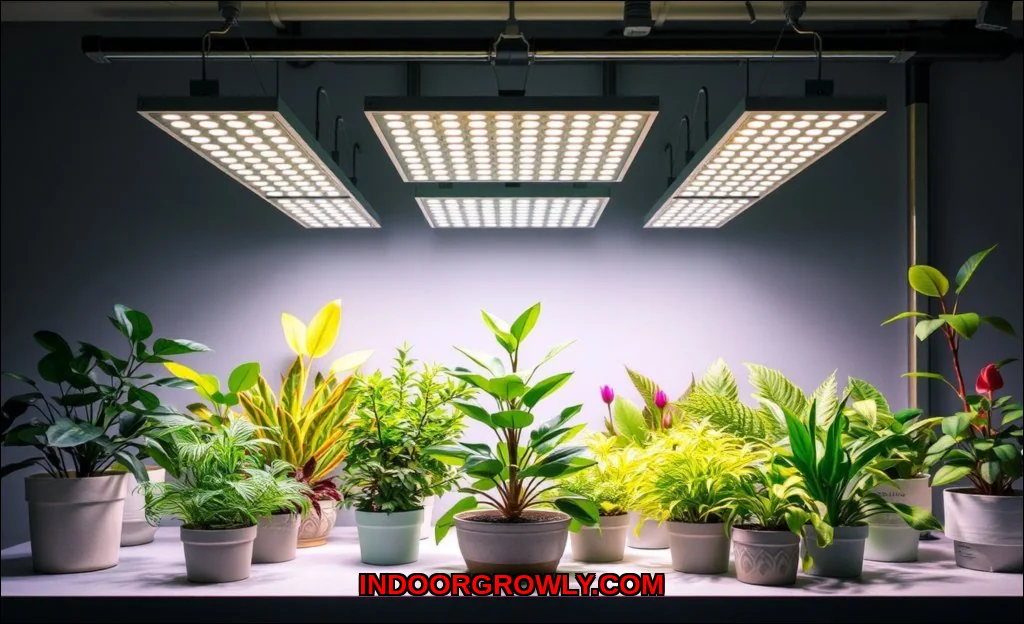
The Core Challenge of a Mixed Plant Environment
Think of light as food for your plants. Different plants have different dietary needs. A succulent from a sunny desert and a fern from a forest floor evolved under completely different light conditions. In a mixed setting, a single light source forces compromises. You might provide enough PPFD (Photosynthetic Photon Flux Density) for your peppers, but scorch your mint. Or you might use a spectrum perfect for vegetative growth, but never trigger flowering in your strawberries.
The key metrics you need to manage are PPFD (Photosynthetic Photon Flux Density) (light intensity at the leaf surface), DLI (Daily Light Integral) (the total daily dose of light), and the spectral quality. Getting these wrong leads to leggy growth, leaf burn, or plants that never fruit. Smart lights give you the tools to get them right for everyone.
How Smart Grow Lights Solve the Diversity Problem
Modern smart LED systems are built for this exact challenge. They aren’t just lights; they’re environmental management tools.
1. Precise Light Spectrum Customization
Not all light is created equal. Plants use specific wavelengths within the PAR (Photosynthetically Active Radiation) range for different tasks. Blue light (400-500nm) promotes compact, vegetative growth. Red light (600-700nm) drives flowering and fruiting. A true full spectrum LED provides a balanced white light, but smart adjustable spectrum grow lights let you dial in the ratios.
This control over photomorphogenesishow light shape plant structureis a game-changer. You can create a “bluer” recipe for your lettuce and a “redder” one for your blooming orchids, all from the same fixture. This is the foundation of effective plant growth optimization.
2. Automated Control & Intelligent Scheduling
Consistency is vital. Programmable lighting schedules ensure your plants receive their ideal photoperiod (light/dark cycle) without you remembering to flip a switch. But smart systems go further. They allow you to set sunrise/sunset ramps, mimicking natural dawn and dusk to reduce plant stress.
The most powerful feature? Light Recipes. You can save presets that combine a specific spectrum, intensity, and timing schedule. Create one recipe named “Leafy Greens,” another for “Fruiting Tomatoes,” and a third for “Low-Light Houseplants.” With one tap, the entire environment shifts. This granular control is central to how to program grow lights for different plants efficiently.
3. Data-Driven Environmental Management
Expert insight: Smart lights allow you to manage the DLI (Daily Light Integral) for each plant type, which is more critical than just the photoperiod for optimizing growth and preventing stress. DLI is the total number of light particles (photons) delivered per day. Your seedlings need a low DLI, while mature fruiting plants crave a high one.
Advanced systems let you input a target DLI, and the light automatically adjusts its output over the day to hit that exact number, compensating for ambient light from a window. This is the pinnacle of data-driven growth optimization in indoor horticulture lighting. For a deeper dive into the science of light and plant health, explore our guide on how smart grow lights improve indoor plant health.
Programming Strategies for Common Plant Groups
Let’s apply this theory. Heres a practical breakdown for setting up your smart system. These are starting points you can fine-tune.
Leafy Greens & Herbs (Lettuce, Basil, Mint)
- Spectrum: High in blue light (cool white setting or custom 30% Red, 70% Blue). Promotes tight internodes and lush foliage.
- PPFD: 200-400 mol/m/s.
- DLI: 12-17 mol/m/day.
- Photoperiod: 14-18 hours of light.
- Recipe Tip: Name it “Salad Bar.” Use a steady, moderate intensity long-day schedule.
Fruiting & Flowering Plants (Peppers, Tomatoes, Strawberries)
- Spectrum: Vegetative Stage: Balanced spectrum. Flowering Stage: Increase red/far-red ratio.
- PPFD: 400-600+ mol/m/s during fruiting.
- DLI: 20-30+ mol/m/day.
- Photoperiod: 12-16 hours (adjust for day-neutral or long-day varieties).
- Recipe Tip: Create two linked recipes: “Tomatoes – Grow” and “Tomatoes – Bloom.” Switch automatically based on plant age.
Orchids & Flowering Houseplants (Phalaenopsis, African Violets)
- Spectrum: Balanced, full spectrum with moderate red. Avoid intense, direct light.
- PPFD: 100-250 mol/m/s (often lower than food crops).
- DLI: 4-12 mol/m/day.
- Photoperiod: 10-14 hours. Some orchids need a seasonal reduction to trigger spikes.
- Recipe Tip: Use a gentle sunrise/sunset ramp. This mimics their natural under-canopy environment.
Benefits Beyond Light: Automation, Energy, and Insight
The advantages of a smart lighting system extend far beyond spectrum control. They create a more resilient and efficient garden.
Saving energy with smart grow lights is a major perk. LEDs are inherently efficient, but smart scheduling ensures they’re only on when needed. You can program lower intensity during off-peak electricity hours or dim lights when you detect sufficient ambient sunlight via connected sensors.
For those pursuing year-round growth, consistency is non-negotiable. Smart systems eliminate the human error of forgotten schedules, providing stable conditions even when you’re away. Learn more about maintaining this consistency in our article on how smart grow lights support year-round growth.
Finally, the data is invaluable. Tracking the light history of a particularly successful harvest lets you replicate it exactly. You move from guessing to knowing.
Selecting and Setting Up Your Smart System
Ready to build your automated light schedule for mixed indoor garden? Focus on these features when choosing your gear.
Key Features to Look For
- True Spectrum Adjustability: Can you control blue, white, red channels independently? Avoid lights that only offer “veg” and “bloom” switches.
- Robust App & Scheduling: The interface should make it easy to create and manage Light Recipes and complex schedules.
- Multi-Zone Light Control: If your garden is in different areas (a shelf for herbs, a tent for tomatoes), ensure the app can control groups of lights separately.
- PPFD/DLI Data: Does the app provide light intensity maps or DLI calculations? This is a sign of a more advanced system.
- Integration: Does it work with other smart home platforms (Google Home, Alexa) or environmental sensors?
Implementation Steps
- Map Your Garden: Group plants with similar needs together spatially. This is the first step toward effective multi-zone light control.
- Research Plant Needs: Note the ideal DLI and photoperiod for each group. Resources like university extension guides on lighting for indoor plants are excellent for this.
- Install & Position Lights: Hang lights at the correct height to deliver the target PPFD. Use a PAR meter or the light’s app data if available.
- Program Your Core Recipes: Start with the templates above. Create your “Leafy Greens,” “Fruiting,” and “Orchid” recipes.
- Observe and Adapt: Watch your plants for a week. Are they stretching? Leaves bleaching? Tweak the intensity or spectrum slightly. Gardening is always iterative.
For comprehensive product comparisons and technical deep dives, industry resources like coverage on how smart LED grow lights are changing indoor farming can provide valuable context.
Your Personalized Sun, Automated
Mastering a mixed plant environment is about providing personalized care at scale. Smart grow lights are the tool that makes this possible. They transform light from a static, uniform resource into a dynamic, sculptable element of your garden’s climate.
You stop fighting against your plants’ natural needs and start working with them. The result is a healthier, more productive, and more beautiful indoor ecosystem. Start with a few simple Light Recipes, embrace the data, and watch your diverse garden thrive under your custom-made sun.