
You’ve moved beyond basic grow light timers. You want a system that thinks, reacts, and optimizes light for your plants automatically. That’s the promise of true grow light automation with sensors. It’s not just about turning lights on and off; it’s about delivering the precise amount and quality of light your plants need, exactly when they need it, while saving energy and effort.
This intelligent approach hinges on a simple but powerful concept: measurement before action. Instead of guessing, your system uses sensors to read the environment, then a controller makes smart adjustments. For a seamless, all-in-one solution, many indoor growers start with a centralized system like the VIVOSUN GrowHub Controller. It’s designed to integrate sensors and lights into a single, manageable platform, making the setup process far more straightforward.
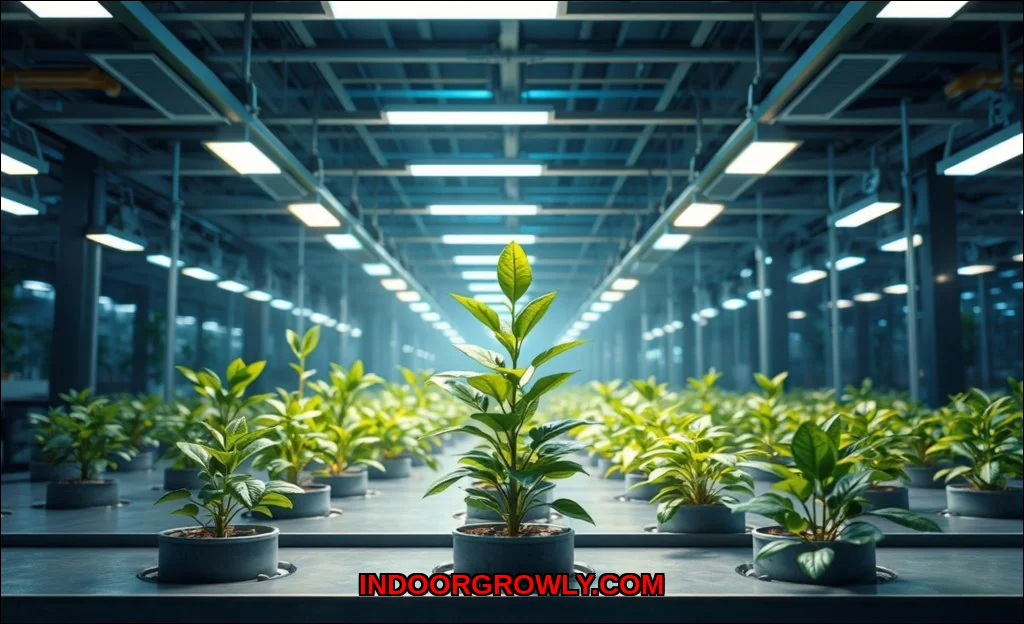
The Core Components: Sensors and Controllers
Every automated smart lighting system is built on two pillars: the eyes and the brain. The sensors are the eyes, constantly gathering data. The controller is the brain, processing that data and issuing commands.
How Sensors Measure Light for Plants
Not all light sensors are created equal. For plant growth, you need to measure the light plants actually use. This is where specialized sensors come in.
- Quantum PAR Sensors: This is the gold standard. A PAR (Photosynthetically Active Radiation) sensor measures light in the 400-700 nm wavelength rangethe spectrum plants use for photosynthesis. Its reading, called PPFD (Photosynthetic Photon Flux Density), tells you how many photons are hitting a specific area per second. This is the critical metric for light intensity adjustment.
- Photodiodes & Ambient Light Sensors: Often built into consumer-grade smart lights, these are less accurate but cheaper. They measure general brightness (lux) but don’t distinguish between plant-useful and useless light. They’re fine for basic photoperiod control but lack the precision for true optimization.
- Spectrometers: High-end tools that measure the full light spectrum. They allow for advanced spectrum tuning, ensuring your lights provide the ideal red, blue, and far-red ratios to influence plant morphology and flowering through Phytochrome responses.
Expert Insight: The most common pitfall is sensor placement. A PAR sensor must be positioned at the plant canopy level, not at the light fixture, to measure the actual light received by the plant. This is critical for effective automation.
The Automation Logic: From Data to Action
This is where raw data becomes intelligent action. The controller, often a DLC controller (Digital Lighting Controller) or a Programmable Logic Controller (PLC), runs the logic. You set the targets, and it works to maintain them.
The most advanced systems use a closed-loop system. Heres how it works:
- Set Your Target: You define a goal, like maintaining a Daily Light Integral (DLI) of 20 mol/m/day for your tomatoes. DLI is the total number of photosynthetic photons delivered over a day.
- Continuous Measurement: The PAR sensor at the canopy takes constant or frequent PPFD measurement.
- Real-Time Calculation & Adjustment: The controller calculates the current DLI accumulation. If it’s tracking ahead of target (e.g., due to sunny weather increasing ambient light), it dims the LEDs. If it’s behind, it increases intensity. This is closed-loop control in action.
This logic also applies to scheduling. Beyond simple on/off times for a photoperiod, automation can create sunrise/sunset ramps, mimicking natural conditions to reduce plant stress.
Optimizing for Plant Growth Stages
Static lighting is a thing of the past. Automation lets you tailor light recipes to each growth phase, a key practice in Precision Horticulture.
| Growth Stage | Automation Focus | Sensor & Control Action |
|---|---|---|
| Seedling / Propagation | Prevent stretch, promote rooting | Maintain lower, consistent PPFD; higher blue spectrum can be automated if using tunable lights. |
| Vegetative | Drive leaf & stem development | Automatically increase DLI target; adjust spectrum balance. The system compensates for canopy density changes. |
| Flowering / Fruiting | Maximize yield and quality | Switch to a flowering photoperiod (e.g., 12/12) automatically. Increase red light intensity. Precisely hit higher DLI targets daily. |
Expert Insight: True automation goes beyond simple timers; it involves a closed-loop system where sensor data directly modulates light output in real-time to maintain a target DLI, compensating for ambient light and canopy density. This is how you achieve consistent results in Controlled Environment Agriculture (CEA).
This level of control directly answers the question: does grow light automation save energy? Absolutely. By dimming lights when ambient light is high or when the daily light target is met early, you avoid wasteful over-lighting. You only use the energy your plants need.
Practical Setup and Calibration Tips
Ready to implement your own system? Follow these steps for a successful how to automate grow lights with a light sensor project.
1. Choosing Your Hardware
Selecting the best sensors for automated indoor grow lights is step one. For serious growers, a dedicated quantum PAR sensor is non-negotiable. Pair it with a controller capable of accepting its input and outputting a dimming signal (like 0-10V or PWM) to your LED drivers.
2. Installation and Placement
- Mount the PAR sensor at canopy height. As plants grow, you must raise the sensor accordingly.
- Ensure the sensor is level and not shaded by leaves.
- Keep it clean! Dust on the sensor will cause inaccurate readings and poor automation.
3. System Configuration and Calibration
This is the most important phase for setting up automated dimming for LED grow lights.
- Calibrate Your Sensor: If possible, use a manufacturer-recommended calibration method. Some sensors can be checked against a known reference.
- Define Your Parameters in the Controller: Input your target DLI for each growth stage. Set your desired light scheduling photoperiod. Configure the dimming range (e.g., 40%-100% of fixture capacity).
- Test and Observe: Run the system for a day. Use a handheld PAR meter to spot-check the canopy at different times and compare it to the automated sensor’s reading. Adjust sensor placement or controller logic if there’s a discrepancy.
- Implement Environmental Monitoring: Integrate temperature and humidity sensors. Advanced automation can link light intensity to temperature control, reducing heat stress.
For a deeper dive into creating effective light recipes, our guide on how smart grow lights help evaluate lighting strategies is a great resource.
4. Ongoing Management
Automation isn’t “set and forget.” You must audit it weekly. Check sensor placement, clean lenses, and verify that plant response matches expectations. Look for signs of light stress or stretching, which indicate a need to adjust your DLI or spectrum targets.
Bringing It All Together
Grow light automation with sensors transforms your grow space from a static room into a dynamic, responsive environment. It shifts your role from a manual operator to a strategic manager. You define the goalsthe optimal DLI, the perfect spectrum for each stage, the ideal photoperiodand the smart lighting system executes them with precision.
The benefits are clear: optimized plant health and yield, significant energy savings, and reclaimed time. It represents the core of modern Indoor Farming. By leveraging accurate PPFD measurement and closed-loop control, you give your plants exactly what they need, precisely when they need it. This isn’t just convenience; it’s the future of cultivating plants indoors. To understand the foundational benefits this automation unlocks, explore our article on how smart grow lights improve indoor plant health.
For those researching specific lighting hardware to pair with an automated system, external resources like this LED grow light wattage guide for beginners and this comprehensive complete guide to LED grow lights offer valuable complementary information. Start with one sensor and one light. See the difference data-driven control makes. Your plants will show you the results.