
The difference between smart and regular LED grow lights lies in their design and purpose. Smart or plant-specific LED grow lights are optimized for indoor plants with a tailored spectrum, precise intensity, and energy-efficient operation, while regular LEDs are made for general illumination. Choosing the right light directly affects plant health, vegetative growth, flowering, fruiting, and overall yield.
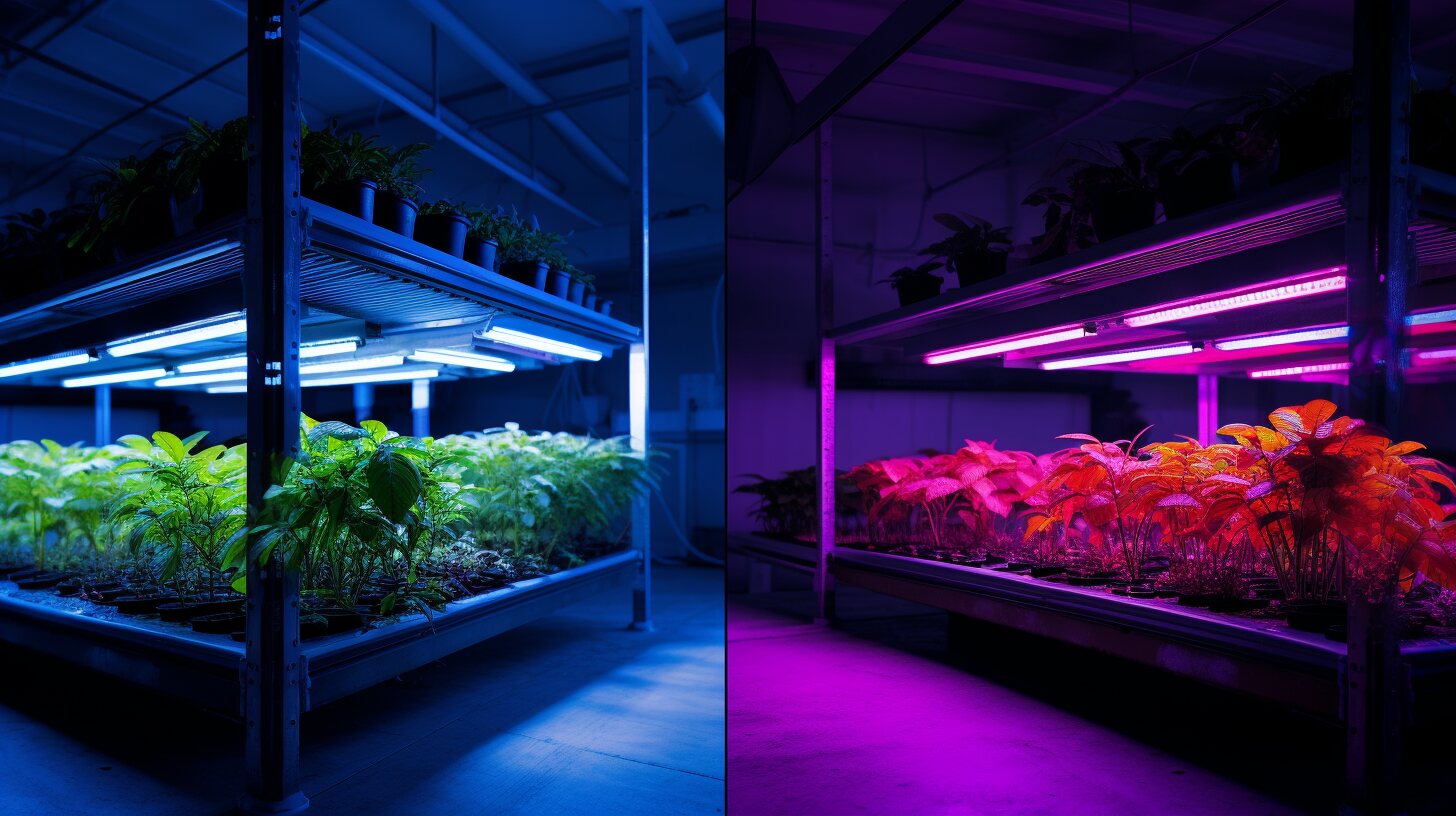
Indoor gardening has grown in popularity, from home herb setups to hydroponic vegetable and flowering plant systems. Understanding the differences between lighting types is crucial to maximizing plant growth and quality. While regular LEDs can illuminate a space, they cannot provide the spectrum and intensity required for photosynthesis, especially during winter or in low-light environments.
LED grow lights, particularly smart and full-spectrum models, have become a staple for indoor gardeners seeking healthier, faster-growing plants with higher yields.
What Is a Grow Light?
A grow light is a lighting system designed specifically to support plant growth. Unlike standard LEDs, which focus on human-visible illumination, grow lights emit light in the photosynthetically active radiation (PAR) range of 400–700 nm, which plants use for photosynthesis.
- Blue light (400–500 nm): Stimulates leaf development and compact stems.
- Red light (600–700 nm): Promotes flowering and fruiting.
- Green light (500–600 nm): Helps light penetrate the canopy for uniform growth.
By mimicking sunlight’s spectrum and intensity, grow lights allow indoor plants to thrive year-round, regardless of natural light availability.
Smart LED Grow Lights vs Regular LEDs
Here’s a detailed comparison of the key factors that differentiate smart or plant-specific LEDs from regular household LEDs.
| Feature | Smart / LED Grow Lights | Regular LEDs |
|---|---|---|
| Spectrum | Targeted wavelengths: blue 400–500 nm, red 600–700 nm, green 500–600 nm | Broad white/yellow light; non-optimized for plants |
| Light Intensity (PPFD) | 400–1300 µmol/m²/s depending on plant type & growth stage | Often below 50 µmol/m²/s, insufficient for healthy plant growth |
| Energy Efficiency | Optimized for plant growth; smart dimming & timers available | Efficient for illumination only; not optimized for photosynthesis |
| Heat Dissipation | Heat sinks or cooling systems prevent overheating and plant stress | Minimal heat; can accumulate in enclosed spaces |
| Lifespan | 50,000–100,000 hours with high-quality diodes | 15,000–50,000 hours; may degrade faster under frequent on/off cycles |
How the Differences Impact Indoor Gardening
Smart or full-spectrum LED grow lights provides several advantages:
- Seedling Vigor: Proper blue light promotes compact, healthy seedlings.
- Vegetative Growth: Balanced spectrum encourages strong stems, lush foliage, and efficient photosynthesis.
- Flowering & Fruiting: Red light triggers flowering and fruit set while preventing overstretched internodes.
Cost-Benefit: Although smart grow lights may have a higher upfront cost, their long lifespan and energy-efficient operation lead to savings on electricity and fewer bulb replacements over time. Additionally, optimized spectrum often translates to higher yields.
How to Choose the Right Light Spectrum for Plants
According to Plant Type:
- Herbs and leafy greens: Balanced red/blue ratio for compact growth.
- Flowering crops: Higher red-light proportion to stimulate blooms and fruit.
- Succulents or fruiting plants: Specific spectrum adjustments depending on species.
Cinsidering Growth Stage:
- Seedlings: Higher blue-light ratio for strong early growth.
- Vegetative Stage: Balanced red/blue spectrum.
- Flowering Stage: Red-light dominant spectrum for flowering and fruiting.
Environmental Considerations:
- Indoor vs greenhouse vs hydroponic setups affect light penetration and spectrum requirements.
- Smart grow lights often allow spectrum tuning for different conditions.
LED vs Other Grow Lights
Advantages of full-spectrum smart LED grow lights:
- Energy-efficient: Convert electricity into useful PAR light with minimal heat.
- Adjustable spectrum: Tailor light for seedlings, vegetative, or flowering phases.
- Low heat output: Minimizes risk of heat stress in enclosed grow spaces.
- Long lifespan: Reliable for 50,000–100,000 hours.
Compared to HPS or single-spectrum lights, smart LEDs reduce energy costs, improve plant quality, and simplify multi-stage growth management.
Optional Product Highlights (Light Marketing)
Spider Farmer SF1000 Full-Spectrum LED Grow Light
- Blue, red, and green wavelengths optimized for vegetative and flowering stages.
- PPFD suitable for seedlings, vegetative growth, and flowering (400–1200 µmol/m²/s).
- Low heat and high energy efficiency; replaces multiple single-spectrum lights.
- Lifespan: 50,000+ hours.
Mars Hydro SP Series
- Reinforced aluminum heat sink for superior heat dissipation.
- Full-spectrum output tailored for indoor flowering crops.
- Smart features: dimming and light timers compatible with smart controllers.
These premium lights ensure better plant quality, higher yields, and energy-efficient operation for serious indoor gardeners.
Actionable Advice
While regular LEDs can illuminate your home, they cannot provide the specific spectrum, intensity, and PAR coverage required for optimal plant growth. Smart or full-spectrum LED grow lights are engineered to meet these needs, offering advantages such as:
- Improved seedling and vegetative growth
- Higher flowering and fruiting yields
- Energy efficiency and reduced heat stress
- Long lifespan and reliable performance
For indoor gardeners, hydroponic growers, or anyone cultivating flowering plants, investing in smart LED grow lights is essential for healthy, productive, and energy-efficient growth. Evaluate your plant type, growth stage, and environmental conditions to select the right spectrum and maximize results.