
You’re setting up an indoor garden. You want strong, healthy plants and a manageable electricity bill. For years, halogen lights were a common, if not ideal, choice for supplemental lighting. But the technology has moved on. Today, smart LED grow lights don’t just outperform halogen bulbsthey redefine what’s possible in indoor horticulture lighting.
This isn’t just about swapping a bulb. It’s about upgrading from a blunt tool to a precision instrument. We’ll break down exactly why smart LEDs are the superior incandescent alternative, covering energy use, plant science, safety, and control. If you’re wondering how to switch from halogen to LED grow lights, understanding these core differences is your first step.
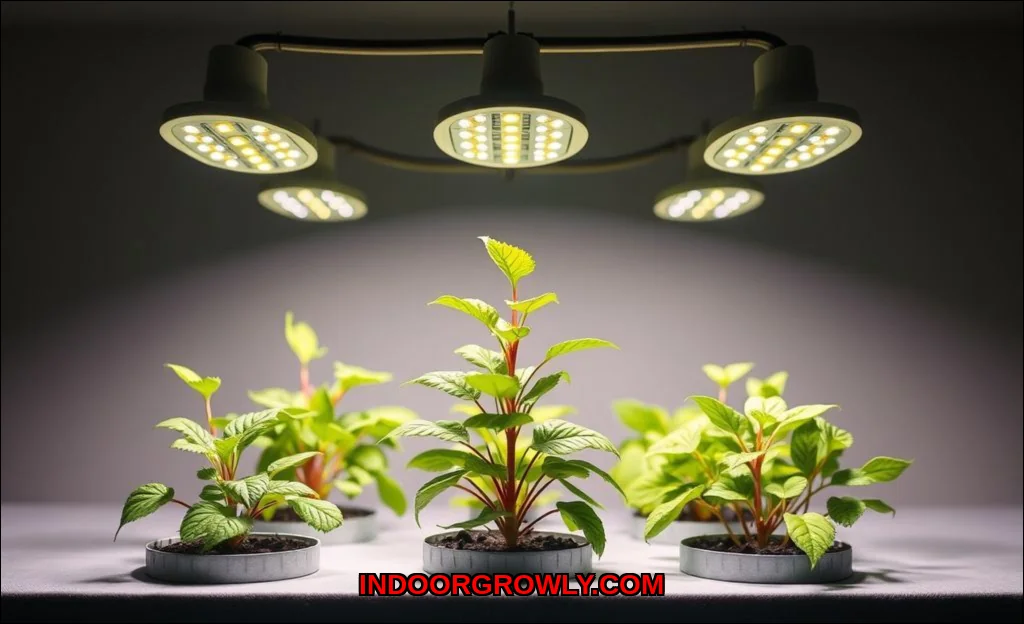
The Fundamental Difference: How Plants ‘See’ Light
Halogen and LED lights create light in fundamentally different ways. A halogen bulb is essentially a refined incandescent. Electricity heats a tungsten filament until it glows, producing a broad, warm-white spectrum heavy in yellow and red wavelengths. A huge amount of energy is wasted as heatover 90%, in fact. This thermal radiation is the enemy of efficient plant growth.
An LED (Light Emitting Diode) produces light electroluminescently. When current passes through a semiconductor, it emits photons of a specific wavelength. This allows for precise engineering. The most critical metric for you isn’t lumens (which measures human vision), but Photosynthetically Active Radiation (PAR)the range of light (400-700 nm) plants use for photosynthesis. Even better is PPFD (Photosynthetic Photon Flux Density), which measures how many PAR photons hit your plant canopy each second.
Think of it this way: Halogens spray a wide, inefficient net. LEDs deliver a targeted payload. For a straightforward upgrade, many home gardeners find success with a plug-and-play system like the Barrina Plant Grow lights, which offer a balanced full spectrum in a familiar form factor.
Why Spectrum Matters More Than “Brightness”
Chlorophyll, the engine of photosynthesis, has specific absorption peaks, primarily in the blue (around 450 nm) and red (around 660 nm) regions. A halogen’s broad, warm spectrum delivers some useful red light but is deficient in the crucial blues needed for compact, vegetative growth. Its output is a poor match for plant physiology.
A quality full spectrum LED is engineered to deliver high output at these exact peaks. It often includes other beneficial wavelengths like far-red (which influences flowering and stem elongation) and white diodes for a more natural appearance. This targeted spectrum means every watt you pay for is pushing growth, not just heating your room. The difference in PAR output per watt is staggering.
Energy Efficiency: The Direct Impact on Your Wallet and Environment
This is where the smart LED vs halogen grow light cost comparison becomes undeniable. Efficiency in lighting is measured in photon efficacyhow many photosynthetic photons (measured in micromoles, mol) you get per joule of electrical energy (mol/J). It’s the miles-per-gallon for grow lights.
- Halogen Lights: Extremely low photon efficacy. They typically operate at 1.7-2.4 mol/J. Over 90% of your electricity bill is literally heating the air.
- Modern LED Grow Lights: High-performance fixtures now exceed 3.0 mol/J, with top-tier models reaching 3.5 mol/J or higher. They convert most of their energy into usable plant light.
Let’s put that in practical terms. To deliver the same PPFD to your plants, a halogen system might draw 500 watts. An efficient LED could achieve the same light intensity with 150 watts or less. That’s a 70% reduction in energy use from day one. The annual savings on your power bill often pay for the LED fixture itself within a grow cycle or two.
Heat & Safety: Why Cooler Operation is a Game-Changer
The massive halogen light heat output creates multiple problems that smart LEDs simply eliminate.
Plant Stress and Environmental Control
Excess heat from halogens can scorch leaves, dry out your growing medium faster, and stress plants, forcing them to divert energy to cooling instead of growth. It also makes it incredibly difficult to control your grow space temperature. You’re constantly fighting the heat source, leading to higher costs for ventilation and air conditioning.
Safety and Fixture Longevity
Halogen bulbs get dangerously hotoften over 480F (250C). This is a fire hazard near flammable materials and a burn risk. LEDs run dramatically cooler at the diode level. While drivers produce some heat, a well-designed fixture manages it with heat sinks, keeping the light surface safe to touch. This cooler operation also means no more heat damage to your light fixtures, reflectors, or the surrounding structure.
Precision Control: From Dumb Bulbs to Smart Ecosystems
This is the true revolution. A halogen bulb is “dumb.” You turn it on or off. That’s it. A smart LED grow light is a programmable platform for plant optimization.
- Light Intensity Control: Dial the brightness up or down with a slider in an app. Perfect for acclimating seedlings or providing gentle light to shade-loving plants.
- Spectrum Tuning: Some smart LEDs let you adjust the ratio of blue, white, red, and far-red. You can create a “light recipe”more blue for bushy vegetative growth, then shift to more red to trigger and sustain flowering. This direct influence on plant morphology and yield is impossible with halogen.
- Smart Grow Light Automation: Program sunrise/sunset cycles, or have lights automatically adjust based on the data from other sensors in your space. This level of control and transparency in plant growth was once only available in research labs.
This automation isn’t a gimmick. It provides consistent, repeatable conditions, reducing human error and allowing for true controlled plant research and cultivation even in a home setting.
Long-Term Value: Durability, Spectrum Stability, and Total Cost
When evaluating the best LED grow lights for replacing halogens, consider the total cost of ownership, not just the sticker price.
Longevity and Maintenance
A halogen bulb might last 1,000 to 2,000 hours. A quality LED grow light is rated for 50,000 hours or more. That’s years of continuous operation without a bulb change. You’re not constantly buying and replacing hot, fragile halogen bulbs.
Spectrum Stability and Output
As halogen bulbs age, their light output (lumens and spectrum) degrades significantly. An LED maintains a consistent PAR output and spectrum throughout almost its entire lifespan. Your plants get the same quality of light on day 1,000 as they did on day 1.
Total Cost of Ownership Comparison
| Factor | Halogen Grow Light | Smart LED Grow Light |
|---|---|---|
| Initial Purchase Price | Lower | Higher |
| Energy Cost (per year) | Very High (70-80% more) | Low |
| Bulb Replacement | Frequent, ongoing cost | Negligible for 5+ years |
| Heat Management Cost | High (extra ventilation/AC) | Very Low |
| Control & Automation | None | Full programmability |
| Plant Growth Results | Inefficient, heat-stressed | Optimized, healthier, higher yields |
Over a two-year period, the smart LED almost always becomes cheaper, even with its higher upfront cost. The operational savings are that substantial.
Making the Switch: What You Need to Know
So, are halogen lights good for growing plants? They can keep a plant alive, but they are fundamentally inefficient and ineffective compared to modern alternatives. Switching isn’t complicated.
- Match Light Intensity: Don’t match wattage. Use a PPFD map or manufacturer guidelines to choose an LED that delivers the light intensity (PPFD) your plants need at the correct hanging height.
- Consider Spectrum: For general growth, a balanced white full-spectrum LED is excellent. For specialized applications (e.g., promoting flowering), look for lights with enhanced red channels.
- Utilize Controls: Start with automated timers. Experiment with dimming. Embrace the control you now have over your garden’s environment.
For deeper dives into selecting the right fixture, resources like this comprehensive guide to grow lights at Epic Gardening and this science-based guide to lighting indoor plants from the University of Minnesota Extension are invaluable.
The evidence is clear. Smart LED grow lights outperform halogen lights in every category that matters: efficiency, plant growth, safety, control, and long-term cost. You’re not just buying a light; you’re investing in a tool that gives you precision command over your indoor garden’s most critical variable. The result is healthier plants, bigger harvests, and the satisfaction of using technology that works in harmony with plant biology. Your plantsand your utility billwill thank you.