
Gardening has always been a blend of art and science. You observe, you learn, you adapt. But what if you could replace some of that guesswork with hard data? That’s the core of evidence-based gardening. It’s a methodical approach where you use measurable inputs and trackable outcomes to make decisions, turning your indoor garden into a living laboratory.
This is where smart grow lights become your most powerful tool. They shift gardening from intuition to instrumentation. Instead of just providing light, they give you the controls and the data to replicate the exact conditions your plants need. For a practical entry point into this world, many indoor gardeners find success with the Necgemlex Smart LED. It offers the core featuresprogrammable schedules and a full spectrumthat let you start applying these principles immediately.
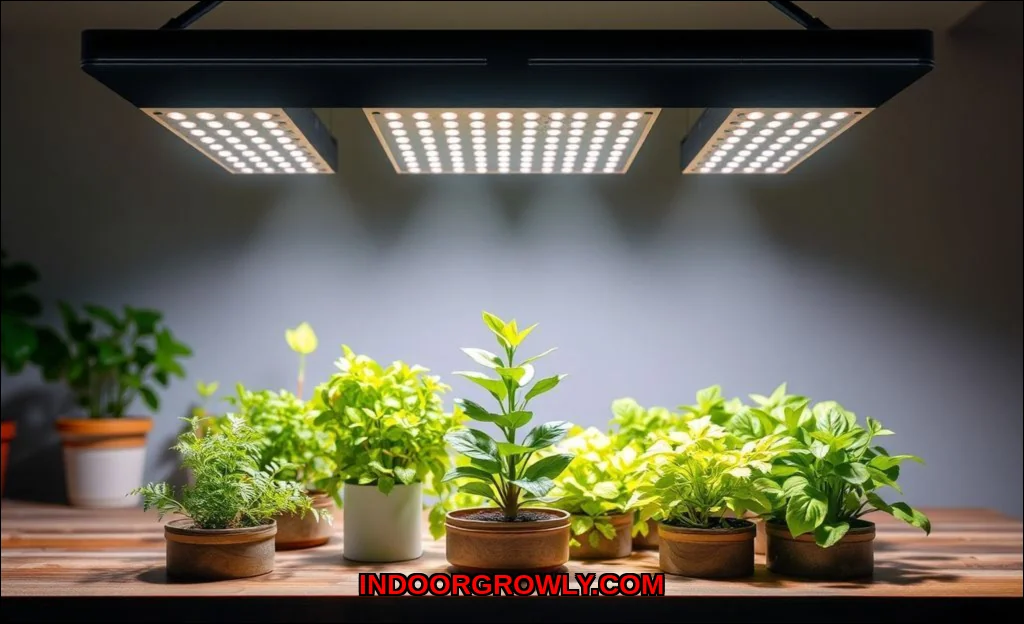
What is Evidence-Based Gardening and Why It Matters
Think of evidence-based gardening as the scientific method applied to your plants. You start with a hypothesis (“My basil will produce more leaves with 16 hours of light instead of 12”), define your variables (light duration, intensity), run the experiment, and measure the results (leaf count, weight). The goal is repeatability and optimization.
This approach is invaluable for indoor growing. You’re creating an entire microclimate. Light, humidity, nutrientsevery factor is controlled. By focusing on data, you can isolate what works and systematically eliminate what doesn’t. This is especially powerful for achieving consistent year-round growth indoors, breaking your dependence on seasons. It transforms gardening from a hobby into a scalable, predictable practice, perfect for urban farming or hydroponics.
How Smart Grow Lights Provide Actionable Data
Traditional grow lights are simple: on or off. Smart grow lights are data hubs. They provide the metrics you need to quantify light, the most critical variable in plant growth. Two key concepts you’ll master are Photosynthetically Active Radiation (PAR) and Daily Light Integral (DLI).
- PAR measures the spectrum of light (400-700 nm) that plants use for photosynthesis.
- PPFD (Photosynthetic Photon Flux Density) tells you how many PAR photons hit a specific area (like a leaf) each second. It’s your measure of light intensity at the plant canopy.
- DLI is the total number of PAR photons delivered over a full day. It’s PPFD multiplied by time. Different plants have specific DLI “budgets” for optimal growth.
High-quality smart lights often provide PPFD maps and let you adjust intensity to hit target DLI values. This is the foundation of data-driven plant care. You’re not just “giving them light”; you’re delivering a precise daily dose of energy.
Decoding Light Spectrum: From PAR to Far-Red
Full spectrum LED technology is what makes this precision possible. It’s not just about white light. It’s about blending specific wavelengths to trigger physiological responses in your plantsa concept known as plant-specific light recipes.
- Blue Light (400-500nm): Crucial for compact, vegetative growth. It regulates stomatal opening and strengthens stems. You’ll use more blue for seedlings and leafy greens.
- Red Light (600-700nm): The driver of photosynthesis and flowering. It promotes stem elongation and fruit production.
- Far-Red Light (700-800nm): While outside traditional PAR, it influences Photoperiodismhow plants measure day lengthand can trigger shade-avoidance or flowering responses in certain species.
Understanding this lets you answer questions like “what is the best light spectrum for seedlings vs flowering?” Seedlings thrive under cooler, blue-heavy spectra, while flowering plants demand increased reds. Smart lights with spectrum control let you tailor this with a tap.
Implementing Data-Driven Light Schedules
Automation is convenient, but the data log is revolutionary. Your smart light’s app doesn’t just execute a grow light schedule; it records it. This allows for true experimentation.
Let’s say you’re setting up automated grow light schedules for herbs. Your hypothesis: Increasing DLI by 20% will increase yield. With a smart system, you can:
- Program “Schedule A” for your control group (standard DLI).
- Program “Schedule B” for your test group (elevated DLI).
- Run both for 4 weeks, keeping other variables constant.
- Harvest, weigh, and compare.
The result is actionable, personal evidence. This repeatable process is how you refine your technique for any crop. It also provides a structured solution for maintaining robust growth during winter gardening indoors, when natural light is scarce.
Optimizing Your Setup: From Seed to Harvest
Now, let’s apply everything stage-by-stage. The key is adjusting your light’s three levers: spectrum, intensity (PPFD), and duration.
| Growth Stage | Light Spectrum Focus | Intensity & DLI Goal | Smart Light Strategy |
|---|---|---|---|
| Seedling / Clone | Higher Blue, Moderate Red | Low PPFD (100-200), Lower DLI | Use a “seedling” preset or lower intensity. Keep lights closer but dimmer to prevent stretch. |
| Vegetative | Balanced Blue & Red | Medium-High PPFD (300-600), Higher DLI | Increase intensity gradually. Program a long photoperiod (e.g., 18/6). Focus on building structure. |
| Flowering / Fruiting | Higher Red, Some Far-Red | High PPFD (500-900+), Maximize DLI | Switch to a “bloom” spectrum. Ensure even canopy coverage. Adjust photoperiod to 12/12 if needed. |
Measuring light intensity for indoor plants is critical at each stage. Use a dedicated PAR meter (some advanced smart systems have built-in sensors) to check PPFD at the canopy. Don’t guess. This ensures your “light recipe” is actually being delivered. Resources from university extensions, like this guide on growing indoor plants under supplemental lights, provide excellent, science-backed DLI targets for common plants.
Beyond the Light: Integrating Your Microclimate
Your smart light is the conductor, but the whole orchestra must be in tune. Increased light intensity raises transpiration, meaning your plants will drink more water and nutrients. It can also affect leaf temperature. This is where your expertise in plant physiology and managing the indoor microclimate comes in.
Use your light’s data as a primary input. If you increase DLI, be prepared to adjust your watering schedule in your hydroponic or soil system. The true power of evidence-based gardening is seeing these connections and creating a holistic, optimized environment. For a broader look at integrated systems, reviews of the best indoor garden kits often evaluate how well lighting integrates with other automated features.
Practical Next Steps for Your Garden
Start simple. Choose one plant you know well. Define a single variable to testlike DLI or photoperiod. Use your smart light’s features to create two distinct schedules. Document everything: your settings, your observations, and your final yield.
Remember, the goal isn’t perfection on day one. It’s building a personal knowledge base. Each experiment makes you a more precise gardener. You’ll learn which plant-specific light recipes your herbs truly love, or exactly how much light your tomatoes need to set fruit. You move from following generic advice to creating your own proven playbook.
This data-driven path demystifies indoor gardening. It replaces anxiety with confidence. You’re no longer just hoping your plants get enough light; you know the numbers, you control the spectrum, and you have a log to prove what works. That’s the tangible, harvestable benefit of pairing smart technology with the timeless practice of growing.