
You want strong, resilient plants. Not leggy, weak stems that flop over under their own weight. The difference often comes down to light quality and control, something traditional grow lights get wrong. Smart grow lights give you the precision to directly influence plant structural strength, turning spindly seedlings into robust, self-supporting specimens.
It’s not just about providing enough light for photosynthesis. It’s about using specific light signals to guide plant architecture. This process is called Photomorphogenesishow light shapes plant growth, from stem thickness to branch spacing. With a programmable fixture, you’re not just a gardener; you’re a conductor, orchestrating the light spectrum to build tougher plants from the cellular level up.
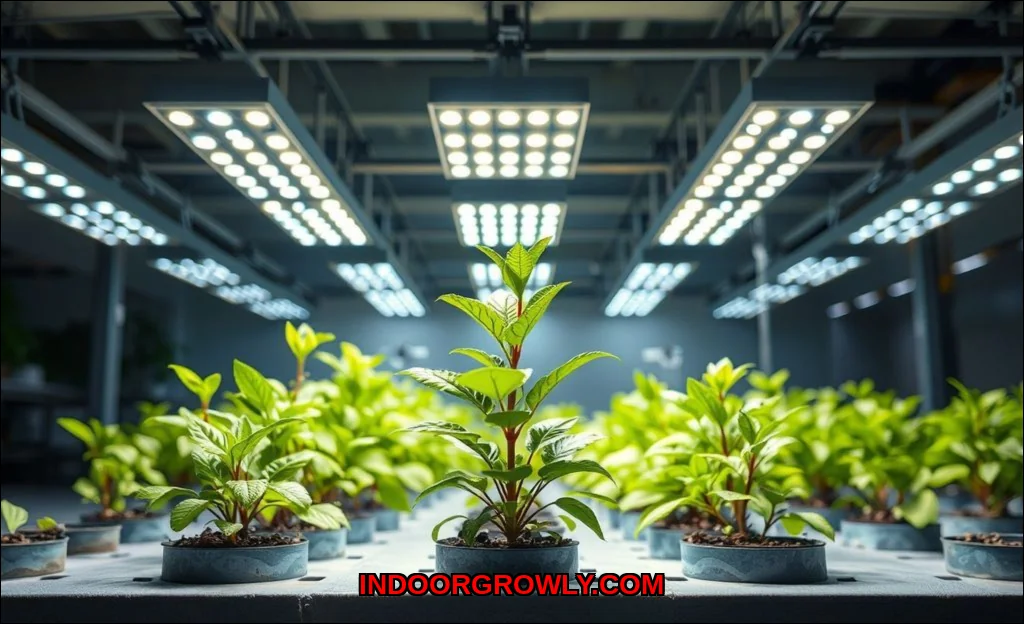
The Science of Light and Plant Structure
Plants don’t just see light as energy. They see it as information. Through specialized proteins called Photoreceptors, they detect the color, intensity, direction, and duration of light. This data dictates their growth strategy. In low light or competitive shade, a plant prioritizes height to reach the sun, resulting in long, weak stems with wide Intermodal Spacing (the gaps between leaves). In full, broad-spectrum light, it invests in sturdy stems and dense branching.
Smart lights manipulate these signals. While basic lights provide a static blend, smart systems let you adjust the spectrum and intensity throughout the day or growth cycle. This allows you to mimic ideal natural conditionsor even create “supernatural” ones that maximize structural integrity. For those starting out, a reliable full-spectrum option like the GooingTop LED Grow light offers a solid foundation for understanding these principles before diving into advanced programming.
Key Photoreceptors: Phytochrome, Cryptochrome, and Phototropin
Three main photoreceptors are your tools for managing plant structure. Each responds to different light colors, triggering specific hormonal responses.
- Phytochrome: This is your shade-avoidance manager. It exists in two forms that flip based on the ratio of red (660nm) to far-red (730nm) light. A high Red:Far-Red (R:FR) ratio signals “full sun,” promoting compact, bushy growth. A low ratio mimics shade, triggering a stretch response. Smart lights let you control this ratio precisely, an impossibility with static-spectrum fixtures.
- Cryptochrome & Phototropin: These are your blue light (400-500nm) specialists. Cryptochrome inhibits stem elongation, directly promoting shorter, thicker stems. Phototropin guides stems toward the light source, ensuring even, upright growth. Together, they are critical for answering the question of how does blue light strengthen plant stems.
Spectral Control: Blue Light for Strength, Far-Red for Stretch
Now, let’s apply that receptor knowledge. The spectrum is your dial for tuning plant architecture.
Blue Light (400-500nm): This is your primary tool for building strength. It activates cryptochrome and phototropin, leading to:
- Shorter, thicker stems with stronger cell walls.
- Tighter internodes, reducing legginess.
- Enhanced stomatal opening, improving gas exchange and overall vigor.
For the best light spectrum for thicker branches, a recipe rich in blue light during the vegetative stage is key. Think of it as a weight-training regimen for your plants.
Far-Red Light (720-740nm): Far-red is often misunderstood. It’s not an enemy but a strategic tool. When used correctly, it can:
- Stimulate stem elongation and leaf expansion (useful in certain growth phases).
- When combined with red light, influence the R:FR ratio to control the shade-avoidance response.
- Promote flowering in some plants when applied at the right time.
The magic is in the balance. A vegetative program might use a 3:1 or 4:1 ratio of blue to red, with minimal far-red. A transition program might introduce more far-red to encourage a controlled, productive stretch.
Dynamic Programming: Mimicking Natural Light Stress
Beyond static color ratios, the true power of smart lights lies in dynamic programming. You can replicate the subtle cues of a natural environment that trigger hormonal strengthening.
Sunrise/Sunset Ramps: Instead of an abrupt on/off switch, program your lights to gradually increase and decrease intensity over 60-90 minutes. This gentle transition mimics dawn and dusk, reducing plant stress and promoting more balanced growth hormone (auxin) distribution. This leads to sturdier stems.
Light Flecks: In nature, leaves experience brief, high-intensity bursts of light as the sun filters through a canopy. Some advanced smart lights can simulate these “light flecks.” Research suggests these momentary high-PPFD (Photosynthetic Photon Flux Density) events can enhance photosynthetic efficiency and may stimulate reinforcing growth responses. It’s a nuanced touch that exemplifies expert-level control.
This level of environmental fidelity is a core reason smart grow lights enhance plant growth transparency, giving you data-driven insights into exactly what your plants are experiencing.
Practical Tips for Programming Your Smart Lights
Ready to put this into practice? Here are actionable smart grow light settings for structural growth. Always start conservative and observe plant response.
Vegetative Stage (Building the Frame):
- Spectrum: Emphasize blue. A spectrum with 25-35% blue light is excellent for compact, strong growth.
- Intensity (PPFD): Target 300-600 mol/m/s for most leafy greens and young plants. Gradually increase as plants mature.
- Daily Light Integral (DLI): Ensure your light duration and intensity combine to hit the optimal DLI for your plant species (often 12-20 mol/m/day for veggies).
- Program: Use sunrise/sunset ramps. Consider a steady light period of 16-18 hours.
Early Stem Strengthening Protocol:
- Week 1-2 (Seedling): Lower intensity (200-300 PPFD), higher blue ratio. Keep lights closer to prevent early stretch.
- Week 3+ (Veg): Ramp intensity to 400-500 PPFD. Maintain strong blue presence. If stems seem too compact, slightly reduce blue or add a touch of far-red at the end of the light cycle.
- Pre-Flower/Stretch Phase: For plants that flower, you can induce a controlled, productive stretch by slightly lowering the blue:red ratio and introducing more far-red light for a few days.
Remember, why plants get leggy under poor light is usually a combination of insufficient total light (low PPFD/DLI) and a poor spectrum lacking in blue. A smart light addresses both. For a deeper dive into the foundational science, our guide on how smart grow lights improve indoor plant health covers PAR, DLI, and overall physiology in detail.
Monitoring and Adjusting: The Expert’s Loop
Your plants will tell you what they need. Monitor these signs:
| Plant Symptom | Likely Light Issue | Smart Light Adjustment |
|---|---|---|
| Long, weak, pale stems | Too low PPFD; insufficient blue light | Increase intensity; boost blue spectrum percentage |
| Extremely compact, stunted growth | PPFD may be too high; blue light excessive | Lower intensity slightly; reduce blue or add slight far-red |
| Stems leaning strongly toward light | Uneven light distribution; phototropin response | Adjust fixture height/angle; ensure even canopy coverage |
Building plant structural strength is an active process. It requires you to interpret feedback and adjust your light recipe. This is where the investment in a programmable system pays dividends, allowing you to correct issues in real-time rather than waiting an entire growth cycle.
You’re no longer just hoping your plants turn out strong. You’re engineering them to be. By leveraging the precise spectral control of smart grow lightscommanding phytochrome with R:FR ratios, harnessing blue light via cryptochrome, and simulating natural stress cuesyou directly influence stem thickness, intermodal spacing, and overall robustness. Start with a strong blue-heavy spectrum for vegetative growth, use dynamic programs to reduce stress, and always let your plants’ morphology guide your settings. The result is a garden that stands tall on its own, built from the light up.